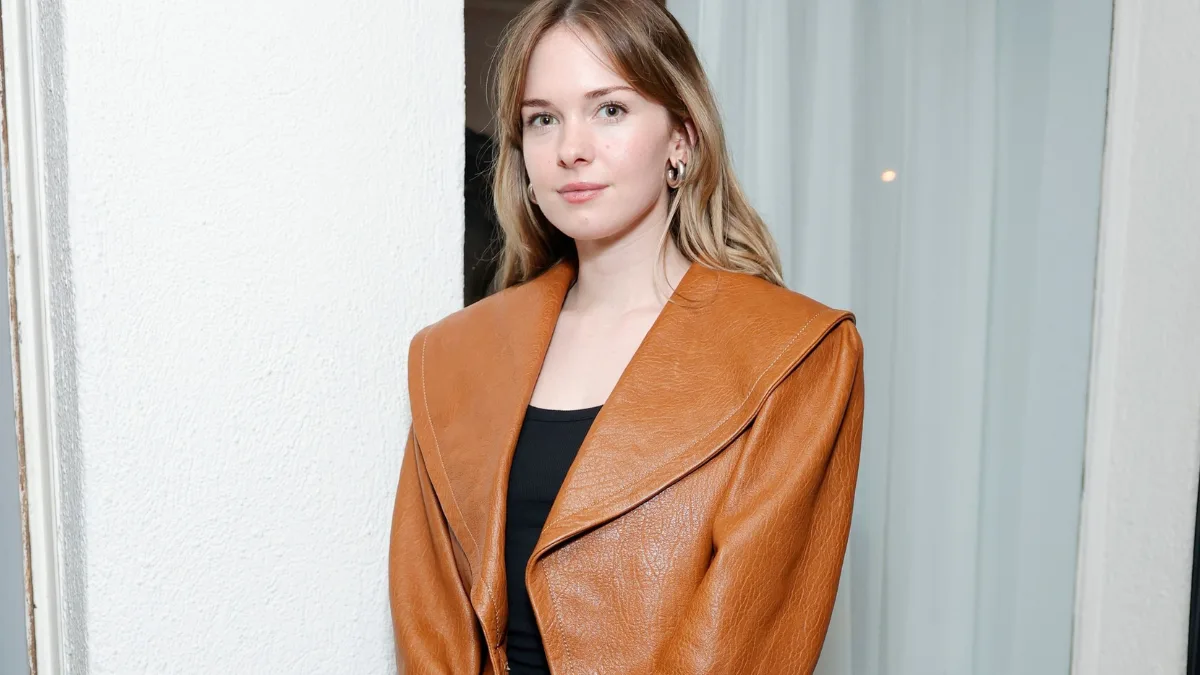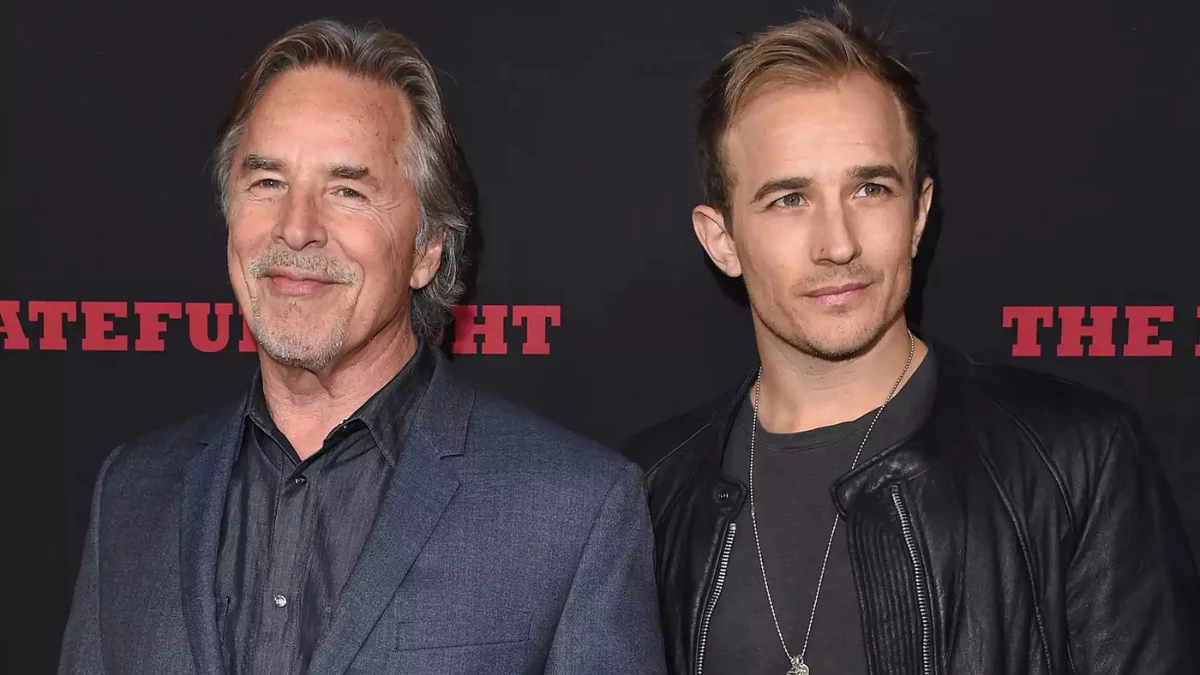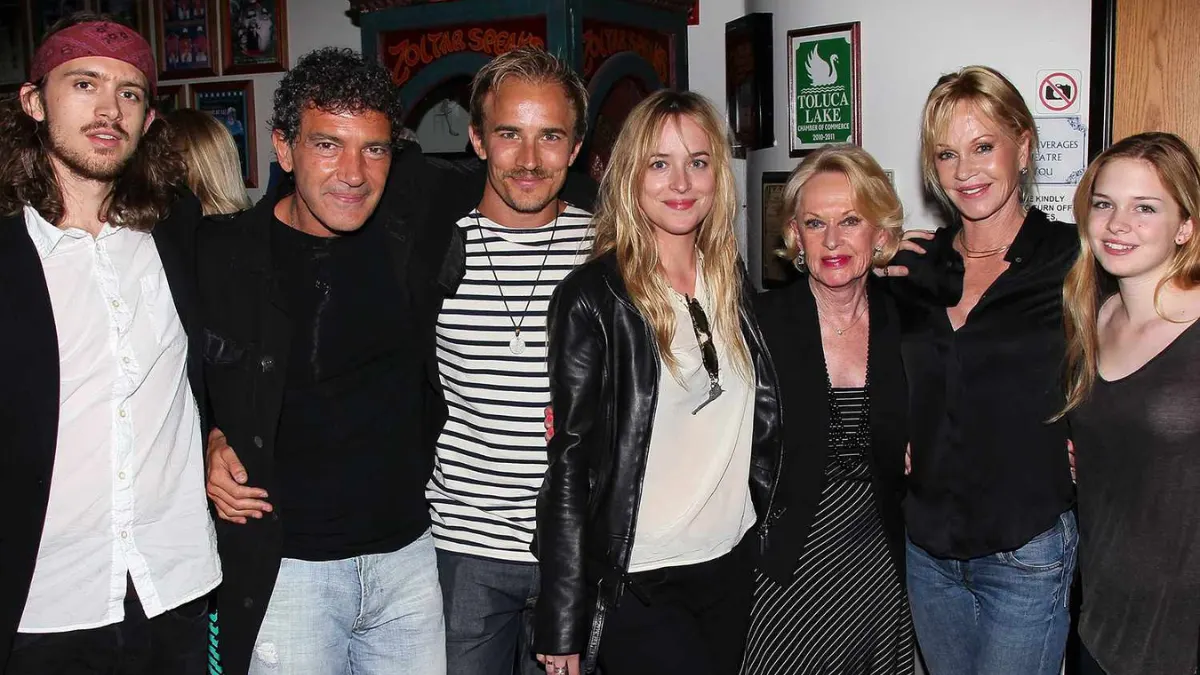
There is a particular kind of childhood that only a handful of people on earth have ever experienced. One where the adults around you are recognizable to strangers. Where family gatherings involve navigating different households, different last names, and different versions of what home means. Where you are simultaneously the centre of your own story and a supporting character in several others.
That was Dakota Johnson’s childhood.
She was born on October 4, 1989, the only child produced by the union of Don Johnson and Melanie Griffith, two of Hollywood’s most magnetic and complicated personalities. In theory, that makes her an only child.
In practice, it made her something far more interesting: the connective thread running through an extended, blended, beautifully messy family that stretched across cities, marriages, and decades.
Dakota grew up with older half-brothers who were already navigating adolescence while she was still learning to read. She watched a baby sister arrive through her mother’s next great love story. And she eventually gained three younger siblings through her father’s quieter, more settled second chapter. Each addition reshaped her understanding of what family actually means.
What she took from all of it is, perhaps, the most revealing thing about who Dakota Johnson really is.
Being the Only Child of Two People Who Couldn’t Stay Together
Don Johnson and Melanie Griffith had a relationship that circled back on itself more than once. They first married in 1976 when Melanie was just eighteen, divorced after six months, reconnected, and eventually remarried in 1989, the same year Dakota was born. They divorced again in 1996, when Dakota was six years old.
This means Dakota’s earliest years were spent inside a marriage that was already carrying the weight of its own complicated history. She was too young to understand the full architecture of it, but children absorb atmosphere even when they cannot name it, and the atmosphere of that household was one of two powerful, passionate, and ultimately incompatible people trying to hold something together.

When the divorce came, Dakota was old enough to feel the shift but young enough that it became simply the new normal rather than a rupture. She moved between her parents’ worlds, which were very different in texture and geography, and she learned early that love and permanence are not always the same thing.
This is something Dakota has touched on in interviews without ever making it sound like a wound. She speaks about her parents with genuine warmth and without the bitterness that such a childhood could easily have produced. The lesson she seems to have absorbed from being the only child of Don and Melanie together is not one of loss but one of adaptability. Families shift. Love remains. You find your footing.
What It Meant to Have Jesse and Alexander Already in the Picture
By the time Dakota was old enough to form real memories, she already had older half-brothers in her life. Jesse Johnson, Don’s son with Patti D’Arbanville, was born in 1982, making him seven years older than Dakota. Alexander Bauer, Melanie’s son with actor Steven Bauer, was born in 1985, placing him four years ahead of her.
Neither of these relationships came with the daily proximity of siblings raised under the same roof. Jesse and Alexander existed in Dakota’s life as presences who moved in and out rather than constants who were simply always there. But that kind of relationship has its own particular texture, one that Dakota has spoken about with appreciation rather than wistfulness.
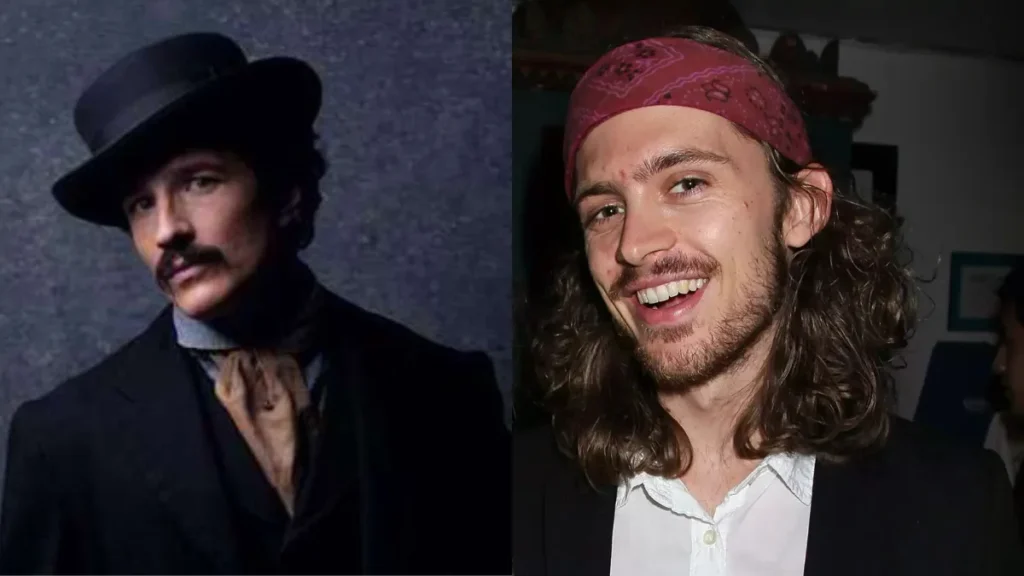
Having older half-brothers meant Dakota was never entirely the youngest, never entirely without reference points for what growing up looked like slightly ahead of where she was standing. Jesse, in particular, has remained a visible and warm figure in Dakota’s life across the decades, suggesting that whatever foundation was built in those early years was solid enough to carry forward.
Alexander, who has chosen a far more private life than any of his siblings, was a quieter presence but a presence nonetheless. For Dakota, growing up with the awareness of siblings who existed in different households and different circumstances likely contributed to the emotional intelligence she has demonstrated consistently as an adult, the ability to hold space for people whose lives look very different from her own.
The Moment Baby Stella Changed Everything About Sisterhood
In 1996, the same year her parents finalized their divorce, something else happened in Dakota’s world that would prove to be one of the most significant additions to her life. Her mother, Melanie, now deeply in love with Spanish actor Antonio Banderas, welcomed a daughter. Stella del Carmen Banderas Griffith arrived on September 24, 1996, and Dakota, six years old and freshly navigating the reality of her parents’ separation, suddenly had a baby sister.

The timing is worth sitting with for a moment. The same year Dakota’s nuclear family formally dissolved, a new branch of her family bloomed. Stella’s arrival did not fill a gap so much as it opened a different kind of door, one that led toward a relationship that would grow into one of the most genuinely affectionate sibling bonds in the entire extended family.
Dakota has spoken about Stella with a tenderness that is distinct from how she discusses her other siblings, perhaps because Stella arrived at a moment when Dakota was young enough to feel the full emotional weight of a baby sister, small and new and entirely present. There is something formative about being six years old and watching a sibling come into the world through a parent’s new love story. It teaches you, in the most concrete possible way, that family is not a fixed thing. It grows. It changes shape. And sometimes the most unexpected additions become the most essential ones.
Stella and Dakota’s bond has carried that early warmth into adulthood, with both women speaking openly about their closeness and showing up for each other in the visible, consistent ways that signal a relationship maintained rather than simply inherited.
What Dakota Has Said About the Lessons Her Family Taught Her
Dakota Johnson is not someone who performs vulnerability easily. She is guarded in the specific way of people who have grown up watching how quickly personal information becomes public property. But over the years, she has offered enough reflections on her family and her childhood to sketch a clear picture of what she took from it.
She has spoken about growing up in a blended family as something that felt normal to her precisely because she had no other reference point. The shuttling between households, the different surnames, the step-parents and half-siblings and shifting configurations of who was sitting at which table for which holiday, none of it registered as unusual because it was simply her life.
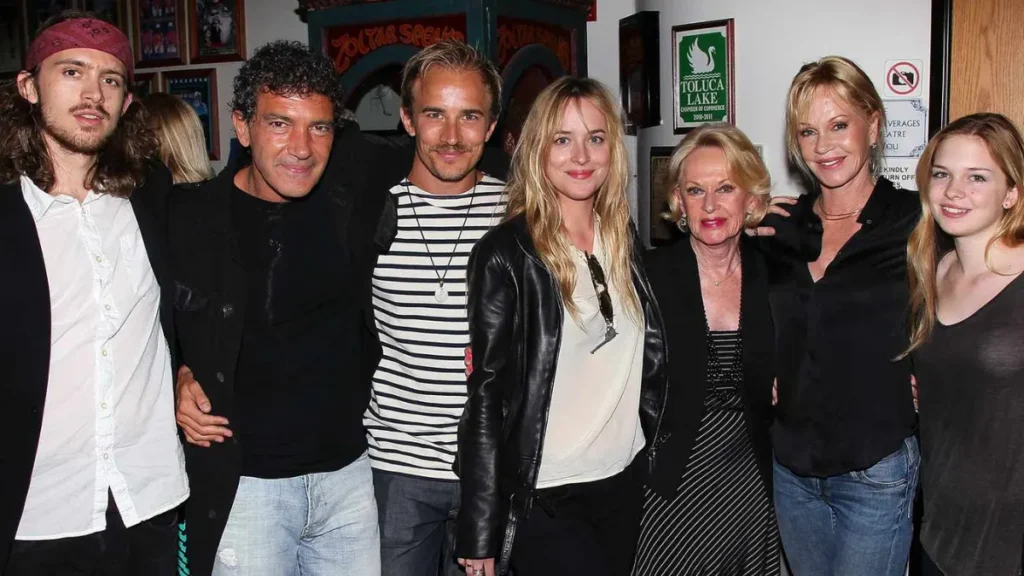
What she has identified as genuinely valuable from that experience is a flexibility about what family means. Dakota has said in various interviews that her childhood taught her not to hold too rigidly to conventional structures, that love shows up in different formations and that the people who stay are the ones who choose to, regardless of what the family tree technically says.
She has also spoken about the example set by her parents, not of a perfect marriage but of two people who, despite their inability to sustain a relationship with each other, remained committed to being good parents and to treating their extended family with dignity. Don and Melanie’s post-divorce relationship, and the way it allowed Dakota to maintain genuine closeness with both of them, clearly shaped her belief that endings do not have to be brutal.

There is something quietly radical about the way Dakota speaks about all of this. She does not romanticize it. She does not catastrophize it. She simply describes it as the education it was.
How the Bonds Built in Childhood Became the Relationships She Relies on Now
The most telling evidence of what Dakota’s childhood gave her is not found in interviews. It is found in the pattern of her adult relationships with her siblings.
Jesse Johnson shows up at her premieres. Grace Johnson is her self-described best friend. Stella Banderas is a constant warmth in her public and private life. These are not relationships maintained out of obligation or managed for appearances. They are relationships that were seeded in childhood, tended across distance and difference, and have grown into something genuine and sustaining.
For someone who grew up as the only child of her particular parents, Dakota has managed to build a sibling network that functions more like a chosen family than an inherited one. Each of her half-siblings brings something different to the picture: Jesse brings loyalty and history, Grace brings intimacy and friendship, Stella brings warmth and continuity.
What Dakota Johnson was given in childhood was not a conventional family. It gave her something harder to come by and arguably more valuable: the understanding that closeness is built, not assumed. That the people who matter are the ones you keep returning to. And that a complicated beginning does not have to produce a complicated ending.
It can, if you do the work, produce exactly the family you always needed.