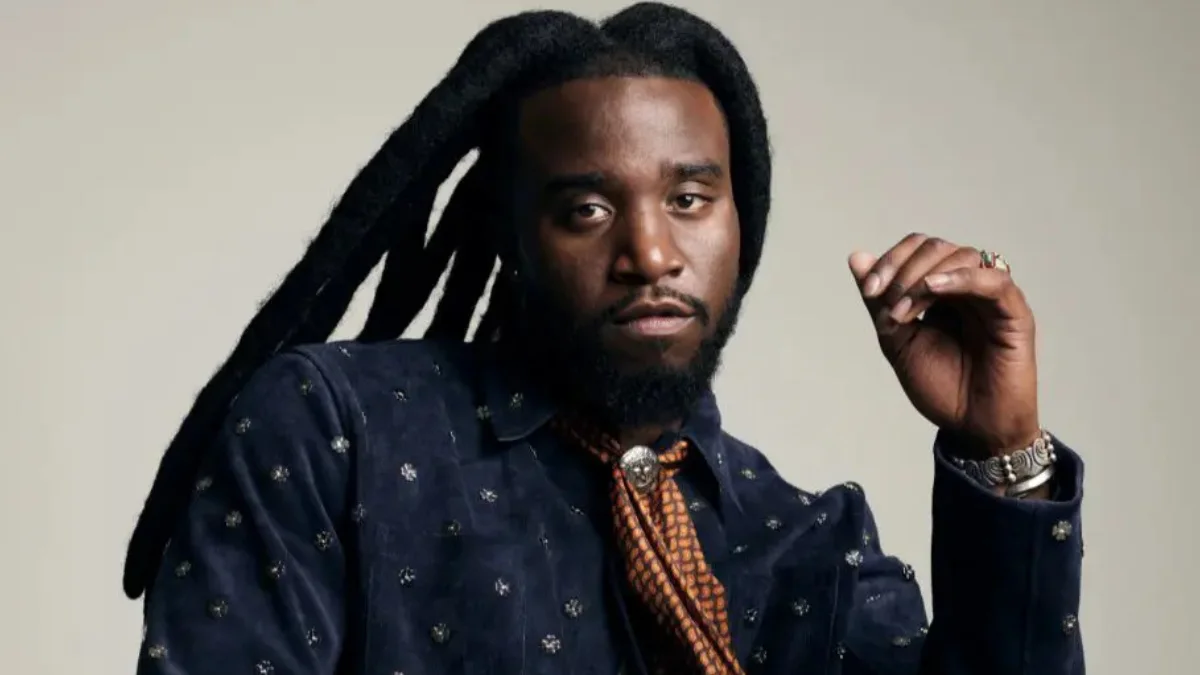
There is a line buried in the middle of the biggest country song of 2024, easy to miss if you are not paying close attention. Among all the bar stool imagery and the boot-stomping chorus of “A Bar Song (Tipsy),” Shaboozey slips in something quietly personal. “I ain’t changing for a check,” he sings. “Tell my ma I ain’t forget.”
That one line contains his entire philosophy. The refusal to sell out. The unbreakable thread running back to his mother. The insistence that no amount of fame or money changes who you fundamentally are, where you came from, or who shaped you. For an artist who came from nowhere particular and ended up everywhere at once, those two sentences are not just lyrics. They are a mission statement.
Collins Obinna Chibueze, known to the world as Shaboozey, did not arrive at superstardom in a straight line. It took a decade of persistence, two boarding school years in Nigeria, a father who dressed like a cowboy and farmed like a Nigerian, a mother who worked thirty years in a psych ward, and a hometown in Woodbridge, Virginia, that most people still cannot place on a map. All of it lives inside his music. All of it shaped the person he became.
What “Tell My Ma I Ain’t Forget” Actually Means
The line lands differently once you know the backstory. Shaboozey’s mother is a retired nurse, and his father was a farmer in Nigeria who later attended college in Texas. These are not people who grew up expecting their son to become a record-breaking country artist. These are people who immigrated, worked hard, raised children in a foreign country, and hoped those children would find something stable and respectable to do with their lives.
During a September 2024 performance, Shaboozey brought his mother onstage and told the crowd directly: “She was one of the earliest supporters in my career. As a Nigerian parent, it’s really hard. She wanted me to go to school and be a lot of things other than what I’m at right now, but she trusted me, and she was a loving mom, and she changed my entire life.”
That is the weight behind the lyric. “Tell my ma I ain’t forget” is not just a shoutout. It is a promise kept. It is a son telling the world that the woman who bet on him against all practical odds was right to do so, and that he has not lost himself in the process of becoming famous. The check did not change him. She is still the one he answers to.
A Nigerian Parent’s Long Road to Support
It would have been easy, understandable even, for a Nigerian immigrant mother to push her son toward medicine, law, or engineering. These are the traditional aspirations of so many immigrant households, and with good reason. They represent security. They represent the payoff of sacrifice.
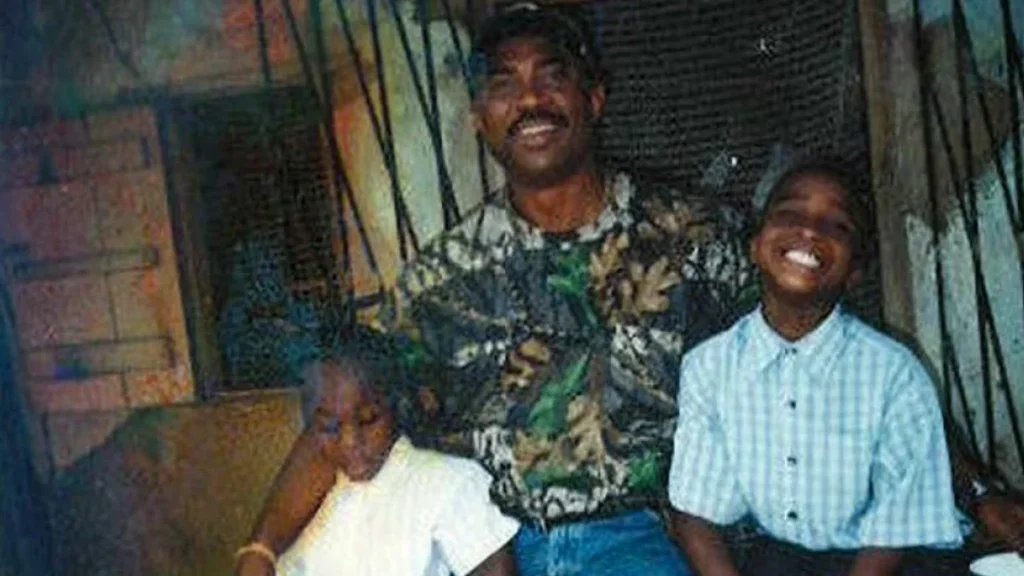
Shaboozey was raised alongside his three siblings by Nigerian parents in Woodbridge, Virginia. His father, who attended college in Texas after immigrating to the United States, always felt somehow connected to country artists. But music as a career? That was a different conversation entirely.
Though his mother initially hoped he’d pursue a more traditional career, her work ethic and eventual support proved essential to his artistic success. “My mom also worked pretty tirelessly. It’s very inspiring. I’m grateful for them,” he has shared.
That eventual support is the part worth sitting with. It did not come immediately. It was earned through years of watching her son refuse to quit, watching him build something real out of nothing, watching the stubbornness she had probably tried to manage in him become the exact quality that made him extraordinary. The Grammy stage was the destination, but the journey was two people slowly finding a shared language for what success could look like.
The Grammy Moment That Stopped the Room
At the 2025 Grammy Awards, the camera found Shaboozey’s mother in the audience during his performance of “A Bar Song (Tipsy),” and she was dancing along to the music. She had accompanied him to the Grammys, watching her son perform on one of music’s biggest stages, in a cowboy hat no less, singing every word of a song that had spent nineteen weeks at number one on the Billboard Hot 100.
Then came February 2026, and a moment even more charged with meaning. When Shaboozey accepted his first Grammy for Best Country Duo/Group Performance, winning alongside Jelly Roll for their song “Amen,” tears were already streaming down his face before he reached the microphone. He pulled a speech from his pocket, telling the crowd he had never written one before, but decided to do so this time. He began by thanking God, then told the room that his mother had, as of that very day, retired from her job after thirty years working in the medical field as a registered nurse in a psychiatric ward.
Thirty years in a psych ward. And on the same day, her son won his first Grammy.
He then dedicated the award to immigrants like his mother: “Immigrants built this country. Literally. Actually. So this is for them. All children of immigrants. This is for those who came to this country in search of better opportunities. Thank you for bringing your culture, your music, your stories, and your traditions here. You give America color.”
It was not a political performance. It was a son using the biggest platform he had ever been given to say the thing he had been saying in smaller rooms and in song lyrics for years. My mother worked thirty years so I could stand here. Do not forget what that cost.
His Father’s Work Ethic as a Life Philosophy
The father’s influence runs just as deep, though it arrived through a different channel. Shaboozey’s father taught him that there was no such thing as luck, only hard work, and that it was on each person to take individual responsibility for their future. “He’s always telling me about individual responsibility,” Shaboozey has said. “It’s on you to really make something of yourself.”
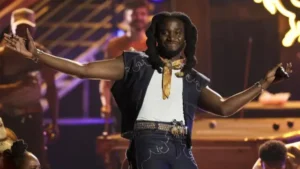
His father was always big on working with his hands, and Shaboozey has reflected: “If anything, I kinda ended up being a lot like him.”
He has also spoken with real tenderness about his father’s unrealized ambitions. “It’s kind of sad to see him work a regular job,” Shaboozey said. “He always wanted to do more. He was always looking for a different idea or way he could empower people and give back to his community and his people. He’s doing that through me, so that’s awesome.”
That is a profound thing to carry. The awareness that your success is not just yours, that it is partly the deferred dream of a man who immigrated from Nigeria, put himself through college in Texas on menial wages, and planted something in his son that he never fully got to express himself.
His father loved country music deeply. Kenny Rogers, Dolly Parton, and Don Williams were among his favorites, and he felt somehow connected to them in a way he could not fully explain.
As Shaboozey described in a GQ interview, his dad would go from playing Kenny Rogers and country songs to then playing traditional Nigerian songs, and there was a connection between the rural and agrarian lifestyles of Virginia and Nigeria that ran through all of it. That sonic inheritance, country and Nigerian, American and Igbo, is the entire DNA of Shaboozey’s sound.
Two Years in Nigeria and What They Left Behind
For junior high, Shaboozey spent two years at a boarding school in Nigeria. This was not a vacation or a heritage tour. It was immersion, the kind that leaves marks that do not fade.
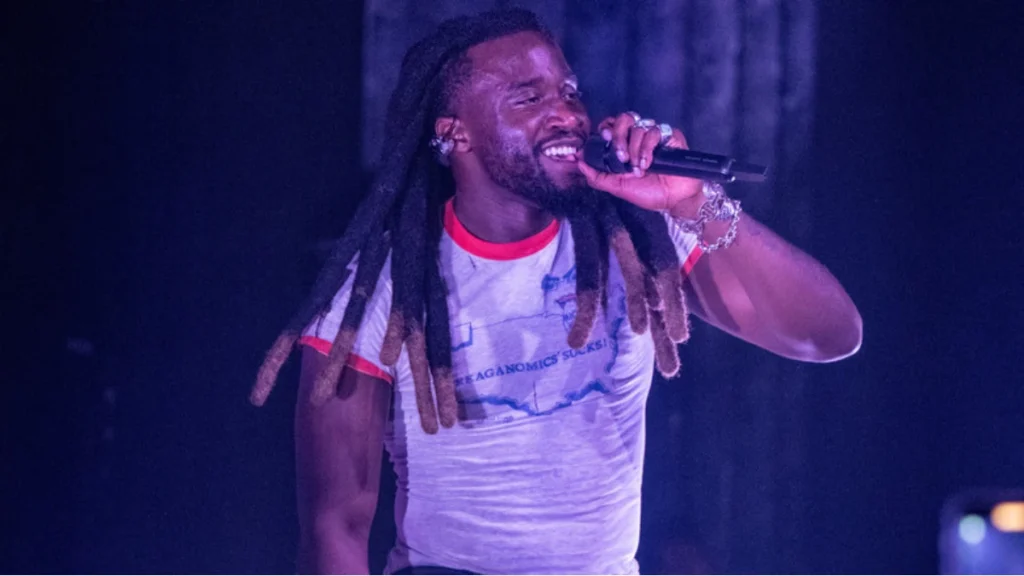
According to reports, Shaboozey spent some of his younger years attending a boarding school in Nigeria, an experience that exposed him to an abundance of cultural differences, deepening his connection to his Nigerian roots and enriching his artistic perspective.
In his GQ interview, he also pointed to the agricultural culture of Nigeria as something that made country music feel natural rather than foreign. “Agriculture is a big thing over there. There are a lot of herdsmen. There are a lot of people growing crops,” he said. When his father listened to Kenny Rogers and felt connected, it was not a strange leap. The land, the labor, the storytelling about hard work and hardship, those things translate across oceans.
Woodbridge, Virginia: The Town He Never Stopped Carrying
Global fame has not relocated Shaboozey’s identity. Growing up Nigerian American in Woodbridge, he recalls the occasional confusion over his name during school attendance. “You felt like you had to make it easier for everyone else to understand,” he has said, a sentiment many children of immigrants can relate to.
His parents responded to those moments not by encouraging assimilation, but by instilling pride. His last name, Chibueze, means “God is King” in Igbo. That meaning became a personal standard: “If I’m going to do anything, I’m going to make sure I’m damn good at it.”
He has spoken about wanting, before everything took off, to build spaces in the community where he grew up, to foster creativity in the mid-Atlantic. He eventually left Virginia for California to make a name for himself, with the explicit intention of returning with something real to offer. The name he chose turned out to be one of the biggest in American music. But the compass was always pointed home.
His stage name itself is a kind of proof. A football coach mispronounced his last name. Most kids would have corrected it and moved on. Shaboozey embraced it, made it his brand, and put it on every chart in the country. He turned the mispronunciation of his Nigerian name into the identity that defines him globally. That is not an accident. That is the philosophy made visible.
Nigeria will always be in his blood. Woodbridge will always be his foundation. And his mother, the retired nurse who worked thirty years and watched her son become exactly who he promised her he would be, is still the person he performs for when he stands on any stage in the world.
He told you so himself. Right there in the chorus.