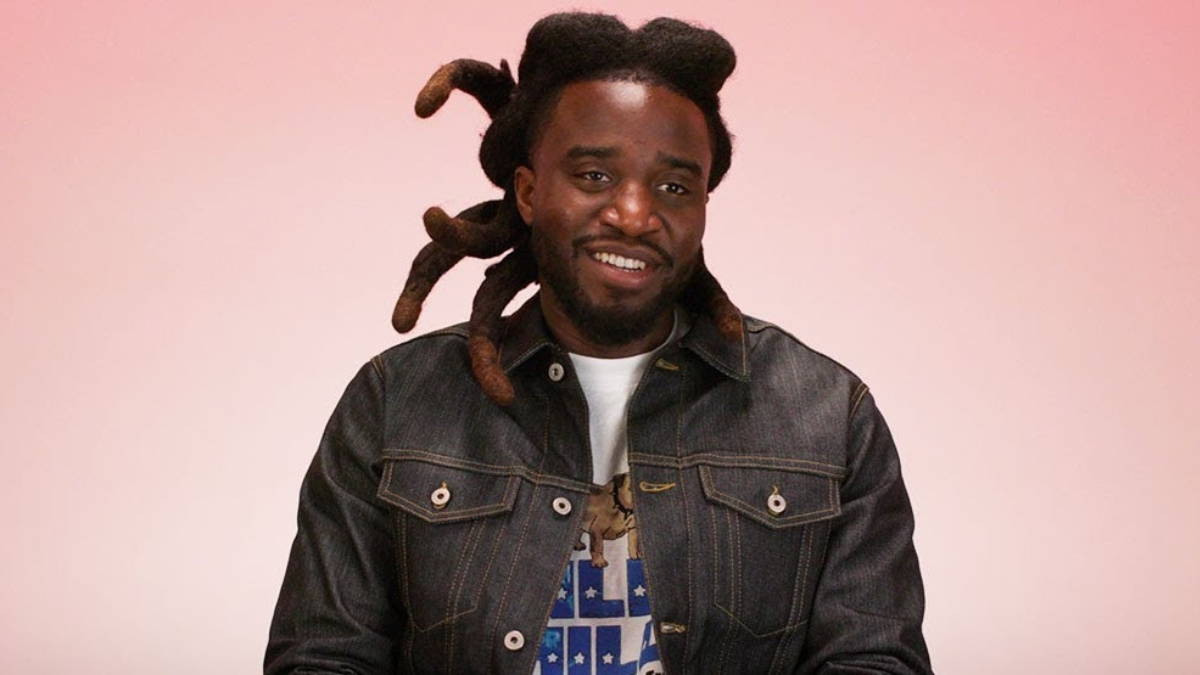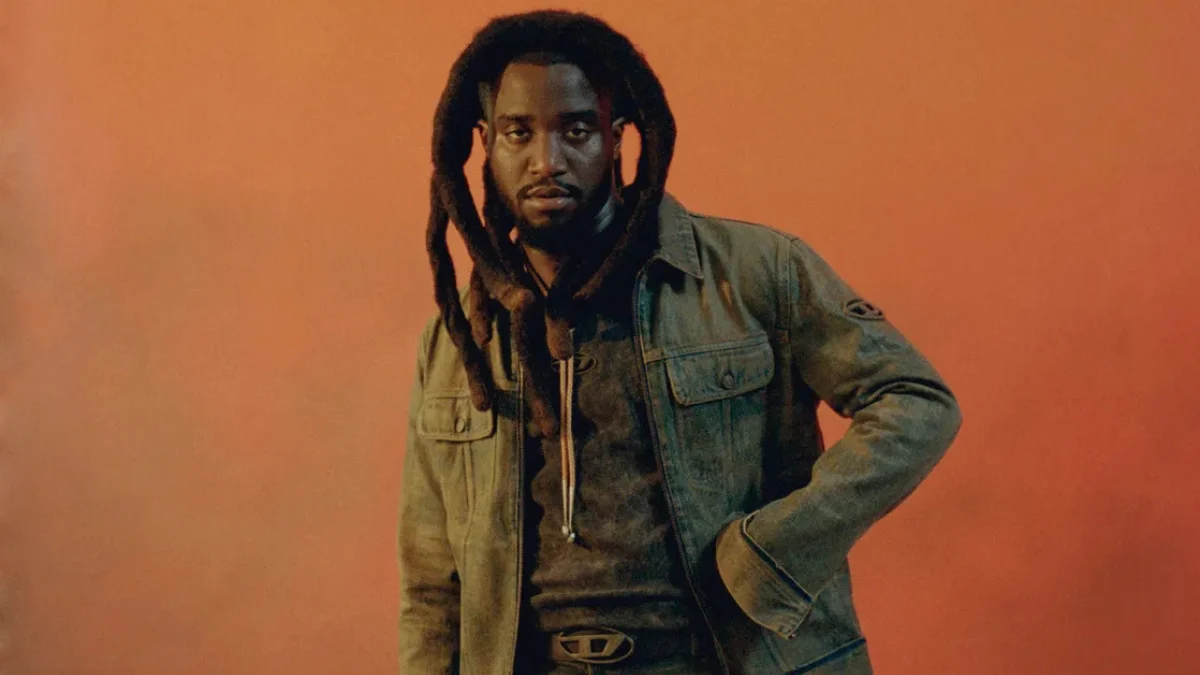
Most people discovered Shaboozey through a single song. But the Nigerian-American artist from Woodbridge, Virginia, had been quietly building something much bigger than a hit record for over a decade.
Long before “A Bar Song (Tipsy)” made him a household name, he was founding production companies, landing film soundtrack placements, and learning the music business from the ground up.
By 2026, the money Shaboozey makes beyond his albums and streams tells a story that most fans have not yet fully read. The brand works with luxury houses and fast-food giants. Publishing royalties flowing from one of the biggest songs in Billboard history.
A long-held dream of opening a creative studio in his home state. This is how Shaboozey built a business empire, not just a music career.
V Picture Films: The Production Company He Founded at Age 19
Most artists launch production companies after they become famous. Shaboozey launched his before anyone knew his name.
In 2014, Shaboozey founded V Picture Films, a production company, to become a writer, director, and producer. He was 19 years old at the time, still releasing his debut single “Jeff Gordon” on a shoestring budget. The fact that he chose to build an infrastructure for storytelling before he had a fanbase says something important about how he thinks.
The name is an ode to a collective he was once part of called Five Sense Records. He changed the five into the Roman numeral V to create V Picture Films. That detail alone tells you this was not a casual decision. It was a deliberate act of identity.
As a Martin Scorsese fan and film enthusiast, Shaboozey directs, produces, and edits the video content that supplements his music and other artists’ work through V Picture Films. This means the company earns revenue not just from Shaboozey’s own projects but potentially from commercial work for other artists as well.
He has spoken publicly about the deeper meaning behind it, saying: “When I was young, I knew I would be a storyteller, and would jump into creating worlds without fear. V Picture Films pays homage to my younger self and is a token reminder to keep that childhood dream alive.”
This is not a vanity project. It is the foundation of a creative business that predates his fame by a full decade.
The Domino’s Pizza Collaboration and What It Means for His Brand Reach
When a global brand chooses one artist to anchor its first major rebrand in over a decade, that is not a small endorsement. That is a statement about cultural reach.
Domino’s announced its first brand refresh in 13 years, and the most significant element of that refresh was a new jingle recorded by Shaboozey, which the brand referred to as the “crave mark,” intended to make the company more memorable for consumers. The jingle, built around the “mmm” sound hidden inside the word Domino’s, became the centerpiece of an entirely new brand identity.
The new look rolled out across U.S. and international markets, appearing on TV, digital advertising, the Domino’s website, ordering app, boxes, print materials, in-store graphics, and team member gear. That level of placement means Shaboozey’s voice is now embedded in one of the most recognizable fast food brands in the world, across every format imaginable.
Shaboozey reflected on the deal, saying: “Pizza is that one food that brings everyone together, different people and generations and cultures, and no one does it better than Domino’s. It was a fun challenge to be the voice for the most craveable food.”
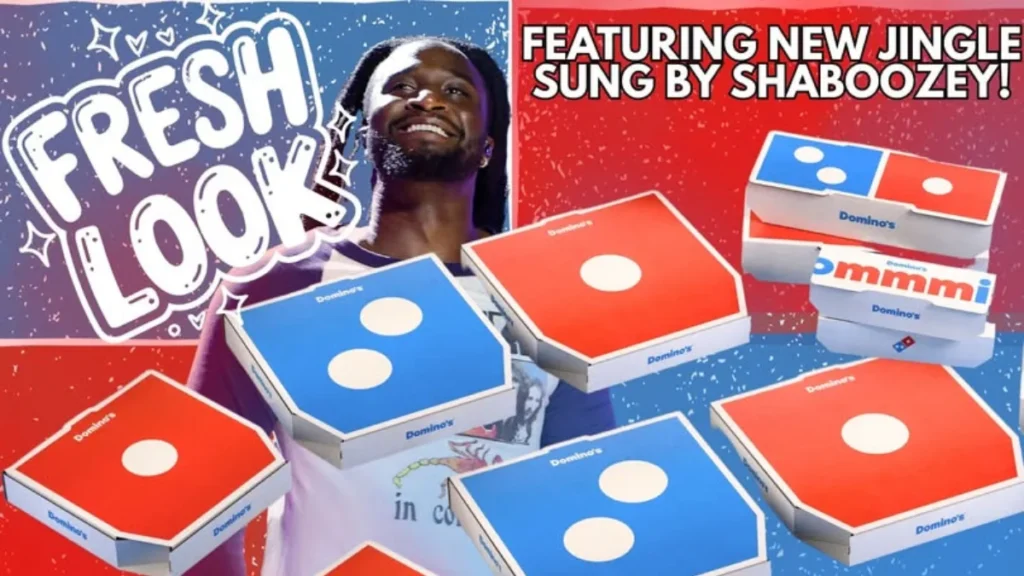
Jingle deals of this scale, with this level of global rollout, typically command significant fees. While the exact figure has not been disclosed, the scope of Domino’s campaign makes it one of the most commercially impactful brand partnerships of Shaboozey’s career so far.
YSL Beauty MYSLF Le Parfum: Entering the World of Luxury Fashion
Not every artist gets a luxury fragrance campaign. The brands that operate at the level of Yves Saint Laurent are extremely selective about who represents them, because every face they choose is a signal about where culture is going.
Shaboozey starred in YSL Beauty’s digital campaign for their MYSLF Le Parfum fragrance alongside Lil Nas X, Peso Pluma, The Kid LAROI, and social media influencer Vinnie Hacker. Being selected for that lineup placed Shaboozey directly in the company of artists who define the current generation of cultural crossover.
He spoke openly about what the partnership meant to him: “Partnering with YSL Beauty is really exciting because they’ve always been at the forefront of culture, redefining what it means to be bold and timeless. I loved how we explored the idea that being strong doesn’t have to mean fitting into a box.”
YSL Beauty’s General Manager for the U.S. described the selection by saying the artists were chosen because they “each bring a distinct and powerful voice” that resonates with the ethos of the fragrance, and that “their authenticity has fueled their success and enabled them to leave a lasting impact on US culture.”
Luxury brand campaigns at this level bring not just income but a repositioning of an artist’s entire public image. After the YSL partnership, Shaboozey was no longer just a country-hip hop hybrid. He was a cultural figure with genuine fashion credibility.
Songwriting and Publishing Rights: How Interpolating “Tipsy” Unlocked a Financial Pipeline
One of the most underreported financial stories of Shaboozey’s rise involves the mechanics of how “A Bar Song (Tipsy)” was constructed, and who earns what from it.
Shaboozey raised the idea of interpolating a vintage rap song during a songwriting session with producers Nevin Sastry and Sean Cook. As soon as he voiced his idea, the line from J-Kwon’s track “Everybody at the bar getting tipsy” came to him immediately. That creative instinct turned into one of the most commercially dominant songs in modern chart history.
Because the song interpolates J-Kwon’s original “Tipsy,” a financial arrangement had to be negotiated before it could be released. J-Kwon’s manager confirmed: “We were compensated. Basically, for the song, we do have credit, and a deal was worked out in both parties’ favor. Respect the artist and his craft. We license it to somebody, and the original artist has to be compensated.”
A representative for Shaboozey confirmed to Rolling Stone that J-Kwon does hold a percentage of rights and ownership of the song. This means Shaboozey, as the primary songwriter alongside co-writers Sean Cook and Nevin Sastry, retains the majority of publishing income on a song that spent 19 weeks at number one and 27 weeks atop the Radio Songs chart. That is an extraordinary and sustained publishing revenue stream.
For context, publishing royalties from a song of this scale, playing tens of millions of times on radio and streaming platforms for well over a year, can generate income that rivals or exceeds what most artists earn from an entire album cycle.
Sync Licensing Revenue: From Spider-Man to NFL Broadcasts
Sync licensing, the business of placing music inside films, television, ads, and games, is one of the most valuable but least visible income streams in the music industry. Shaboozey has been building a sync portfolio since 2018.
In 2018, Shaboozey was asked by Duckwrth to sing the hook for “Start a Riot.” It went so well that he was also asked to sing the second verse. The song was included in the soundtrack to Spider-Man: Into the Spider-Verse and led to national recognition for Shaboozey. Landing a placement on an Academy Award-winning animated film’s soundtrack introduced his voice to a global cinema audience years before “A Bar Song” existed.
The “Start a Riot” track garnered over 85 million streams on Spotify, driven in large part by the film’s massive audience and ongoing streaming life, and those streams translate to ongoing royalty income for Shaboozey as a credited songwriter and performer.
The sync work did not stop there. Shaboozey also wrote “Took a Walk” for Lionsgate’s film The Long Walk, adding another major sync placement to his portfolio. He also locked down the NFL’s Thursday Night Football opener with “Let ‘Em Know,” which is one of the most-watched regular television broadcasts in America. NFL sync placements command premium licensing fees and reach tens of millions of viewers per week.
Each of these placements earns upfront licensing fees, ongoing performance royalties, and something equally valuable: exposure to audiences who may never have encountered his music otherwise.
How the Cowboy Carter Features Expanded His Commercial Opportunities
The Beyoncé effect is real, and Shaboozey experienced it in a way very few artists ever get the chance to.
In January 2024, after a member of Beyoncé’s team heard Shaboozey’s then-unreleased “A Bar Song (Tipsy),” he was asked to sing on two songs with Beyoncé. The tracks were included on her album Cowboy Carter, released in March 2024. Being the only artist to appear on the album twice was not an accident. It was a signal to the industry that Shaboozey had something that Beyoncé, one of the most commercially astute artists alive, recognised as genuinely exceptional.
The immediate commercial impact was significant. His name attached to one of the most anticipated album releases of 2024 placed him in front of Beyoncé’s global fanbase before “A Bar Song” had even officially dropped. That head start created a built-in audience of tens of millions of curious listeners who already knew his name when his own single arrived weeks later.
His appearance on Cowboy Carter gave him a significant bump in profile, putting him alongside a lineup that included Willie Nelson and Dolly Parton. Being mentioned in the same sentence as those artists transformed how the industry perceived him. Record label executives, brand managers, and booking agents all updated their assessments of who Shaboozey was and what he was worth.
The Cowboy Carter features did not just introduce him to fans. They opened commercial doors, from luxury brand campaigns to major network television appearances, that might otherwise have taken years longer to unlock.
Long-Term Wealth Strategy: The Virginia Studio and What Comes Next
The clearest sign that Shaboozey is thinking beyond his current moment is the goal he has spoken about that most people have overlooked entirely.
Through V Picture Films, Shaboozey has expressed a specific ambition: to build a studio in Virginia that can serve and host mid-Atlantic talent. His goal is to build his production company and someday have a film studio in Virginia where mid-Atlantic artists can collaborate. That is not a lifestyle purchase. That is an infrastructure investment that would generate income and creative output for other artists while rooting Shaboozey’s legacy in the region that shaped him.
He also launched his own record label, American Dogwood, in partnership with EMPIRE, which means he now sits on both sides of the deal structure that has historically defined how artists get paid and how much control they keep. Owning a label means earning a share of income from other artists’ work, not just his own.
Add to that an expanding sync portfolio, ongoing publishing royalties from one of the most-played songs in modern radio history, and a brand partnership track record that now spans luxury fragrance, global fast food, and Super Bowl advertising, and the picture that emerges is not of an overnight sensation trying to cash in quickly. It is of an artist who spent ten years building the right relationships, the right rights ownership, and the right business instincts to capture everything that his breakthrough moment had to offer, and then some.