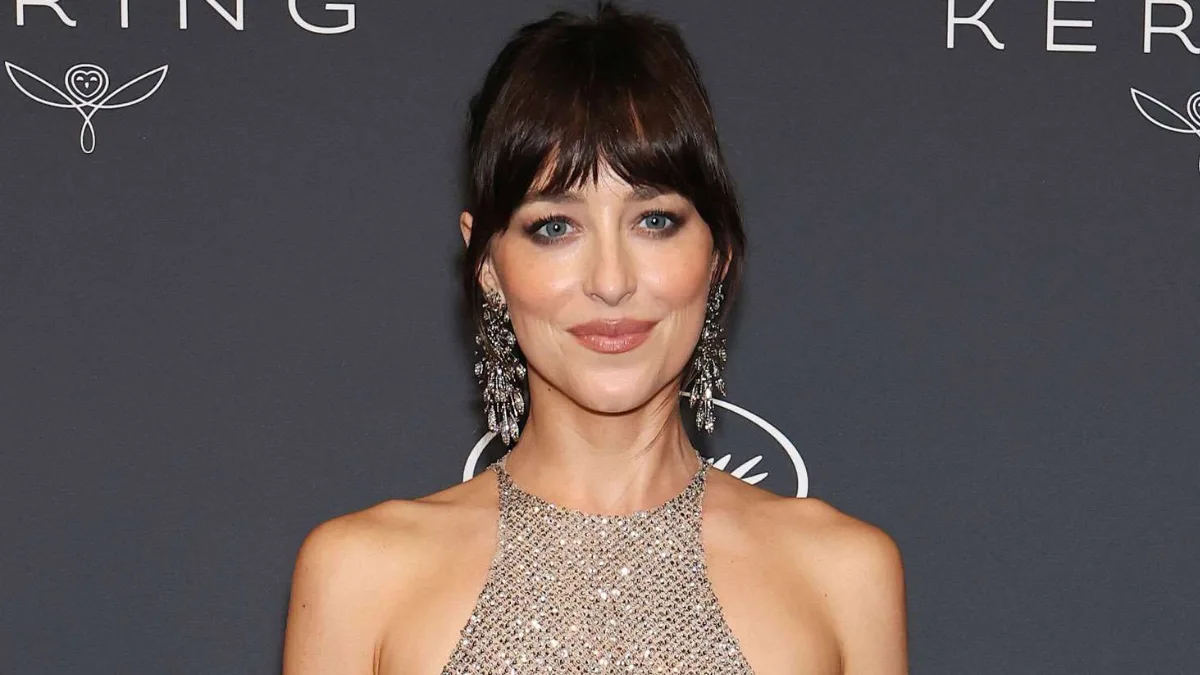
Most people know Dakota Johnson as an actress. Fewer realise she has quietly built one of the more diversified income portfolios in her generation of Hollywood talent.
By 2026, she will not be simply collecting acting cheques. She is earning from production deals, luxury brand contracts spanning fashion and jewellery, startup equity in a wellness company, and a newly signed first-look television agreement with Sony Pictures Television.
The number that shows up in most net worth estimates, somewhere $14 million, only scratches the surface of how her money actually works.
Pull back the curtain, and the real story is not just what she earns per film. It is how every project, partnership, and business venture she has touched in the last decade has been carefully designed to compound.
Here is the full breakdown.
What She Actually Earns Per Film
The most famous data point in Dakota Johnson’s financial story is also the most misunderstood. According to Time Magazine, her initial payday for the first Fifty Shades of Grey film was $250,000, but following the franchise’s massive global success, she renegotiated a seven-figure salary for the sequels, along with box office bonuses.
That renegotiation matters enormously to understanding how her career earnings work. She did not simply get paid more. She proved she understood leverage. When a film earns over half a billion dollars globally, and your face is the one on every poster, the power dynamic shifts completely. She used that shift.
By the time she reached Madame Web in 2024, she reportedly earned $5 million for her leading role. That number, while still unconfirmed by her representatives, has circulated widely and is broadly consistent with what a commercially established Hollywood actress commands for a major studio superhero film.
As a result, it is reasonable to assume she receives a salary in the seven-figure range for her movie roles today, with the Madame Web payday, if accurate, suggesting that range can extend up to $5 million depending on the project’s scale.
What is notable about her post-Fifty Shades career choices is that she has not simply chased the biggest paycheques. Films like Daddio, The Peanut Butter Falcon, and The Lost Daughter carry far more modest budgets and likely far smaller acting fees.
Those choices cost her short-term income but built something arguably more valuable: a reputation as a serious actress that luxury brands and prestige filmmakers both want to attach their names to. That reputation is now paying dividends in ways that go well beyond the acting fee on any single film.
TeaTime Pictures: Where the Real Backend Money Lives
After establishing a solid footing in acting, Dakota co-founded TeaTime Pictures with former Netflix development executive Ro Donnelly in 2019. From the outside, it looks like a passion project. From a financial perspective, it is one of the smartest long-term moves she has made.
The company’s model is built around acquiring compelling stories that struggle to get made through conventional studio channels, producing them independently, and then selling distribution rights to major platforms. That model has already produced real results.

The 2022 Sundance Audience Award-winning film Cha Cha Real Smooth was acquired by Apple TV+, and another 2022 entry, Am I Ok?, was acquired by Max. Apple secured the rights to Cha Cha Real Smooth in a $15 million deal. TeaTime was a co-producer on that film, which means a portion of that acquisition figure flowed back to the company.
Then, in July 2025, the stakes got considerably higher. TeaTime Pictures signed a first-look deal with Sony Pictures Television, under which the company will develop and produce scripted content for the indie studio targeting streaming and cable platforms. A first-look deal is not just a prestige arrangement. It typically includes a financial guarantee from the studio, paid to the production company in exchange for the first right of refusal on everything they develop. That is recurring income, not tied to any single film performing well.
The company has also expanded structurally. TeaTime brought on Samantha Racanelli as President of Production and hired dedicated development and creative executives, reflecting major operational expansion. This is no longer a side project run from a phone. It is a functioning production infrastructure with institutional partners and a growing slate.
In March 2024, Johnson also launched TeaTime Book Club, which operates through Instagram and feeds directly into the production pipeline by identifying literary IP for adaptation. It is a pipeline that simultaneously grows her personal brand and her company’s content library. Few actresses her age are thinking this far ahead.
Three Brand Deals Running Simultaneously
The fashion and luxury dimension of Dakota Johnson’s income is something that rarely gets the financial scrutiny it deserves. By 2026, she is operating three distinct brand ambassador relationships at the same time, each serving a different corner of the luxury market.
The oldest and most visible is Gucci. As per WWD, she has been a Gucci brand ambassador since 2017, a relationship that has spanned multiple creative directors and remained intact through every major change at the Italian fashion house. Ambassador contracts at this tier of luxury fashion are not made public, but industry norms suggest long-term deals of this nature, with campaign commitments, event appearances, and exclusivity clauses, typically run into the millions annually for talent at her profile level.
The second relationship is with Valentino. She became a global Valentino ambassador in October 2025, a move that is particularly interesting given that her close friend Alessandro Michele, the creative force behind her Gucci relationship, had moved to Valentino. The timing suggests the Valentino deal was partly a personal loyalty play and partly a strategic expansion into a second top-tier fashion contract. The Valentino deal has been reported to be worth mid-six figures, though this figure has not been officially confirmed.
The third, and most recently formalised, is with Roberto Coin. Roberto Coin announced Dakota Johnson as its global brand ambassador, with the partnership running through May 2027. The campaign, shot in Venice, includes a second instalment releasing in May 2026, with Johnson also set to make global appearances and participate in creative initiatives. The jewellery space is a different category from fashion, and this deal signals a deliberate move to dominate multiple segments of the luxury market at once.
She is effectively serving as Roberto Coin’s global brand ambassador through 2027 while simultaneously maintaining her relationships with Gucci and Valentino, all three contracts running concurrently. That is not a coincidence. It is a deliberate positioning strategy, and it is generating income from three separate luxury pipelines.
The Maude Investment: Playing the Long Game
Away from the red carpet and the film sets, Dakota Johnson made a quieter bet in 2020 that could prove to be one of her more financially significant moves over the next decade.
She is an investor and co-creative director for Maude, a sexual wellness startup that raised $5.8 million in Series A funding. She joined the brand in its early stages, when the sexual wellness category was just beginning to see mainstream investment and consumer acceptance.

The Maude investment is not just equity. Taking on the title of co-creative director means she has creative input into the brand’s direction, which deepens her stake in its success and gives her a level of involvement that goes beyond a celebrity endorsement.
If Maude continues to grow in a category that has seen significant investment since the early 2020s, her early equity position could become meaningfully valuable. It is the kind of long-term play that does not show up in an annual income estimate but materially affects total wealth over time.
What the Producer Credit Actually Changes
When Dakota Johnson takes a producer credit on a film, it is not ceremonial. It changes the financial structure of her involvement in that project entirely.
An actress who only acts in a film earns her contracted fee and walks away. A producer who also acts earns the acting fee and participates in the backend economics of the project. That means if the film sells to a streaming platform, gets picked up for distribution, or earns residuals over time, the producer receives a share of those proceeds. Every sale TeaTime negotiates, every platform deal, every renewal generates income that the actress-only version of Dakota Johnson would never see.
Her IMDb credits show that she has produced or executive-produced a growing list of films, including Cha Cha Real Smooth, Am I Ok?, and Daddio, as well as serving as executive producer on the upcoming Verity. Each of those credits represents a financial stake in the project’s commercial life beyond the initial release.
The Sony Pictures Television first-look deal takes this a step further. Under the pact, TeaTime will develop and produce scripted content for the indie studio targeting streaming and cable platforms, meaning every project that moves through that pipeline generates producing fees and potentially backend participation, independent of whether Dakota Johnson appears on screen at all.
That is the key shift. She has built a company that makes money whether she stars in a film or not. For an actress who has always been selective about on-screen roles, that off-screen income engine is exactly the kind of financial foundation that sustains wealth long-term in an industry where acting careers are inherently unpredictable.
In 2026, Dakota Johnson is not simply one of Hollywood’s better-paid actresses. She is a functioning media business, and the money reflects that.