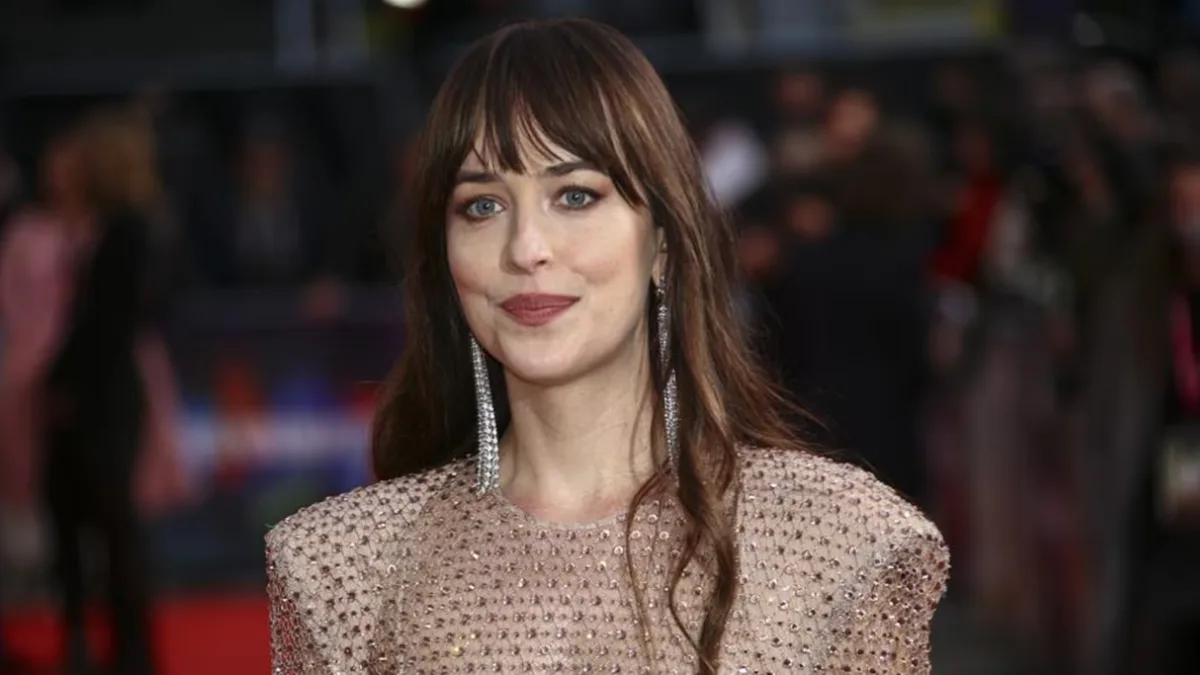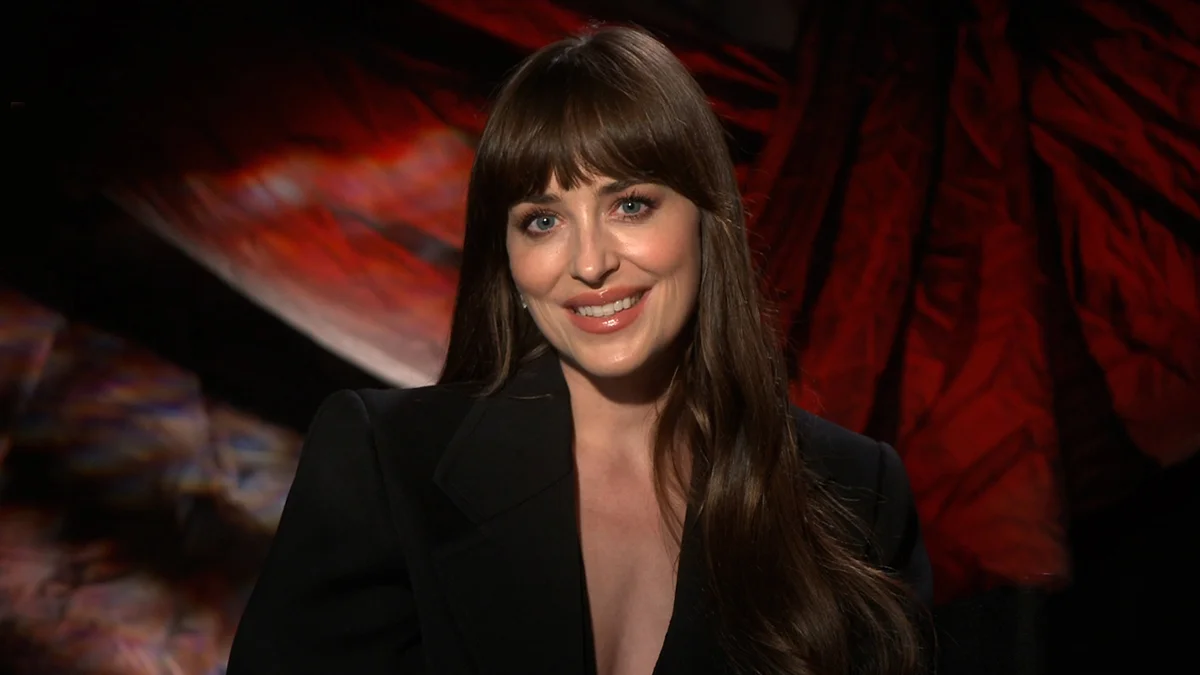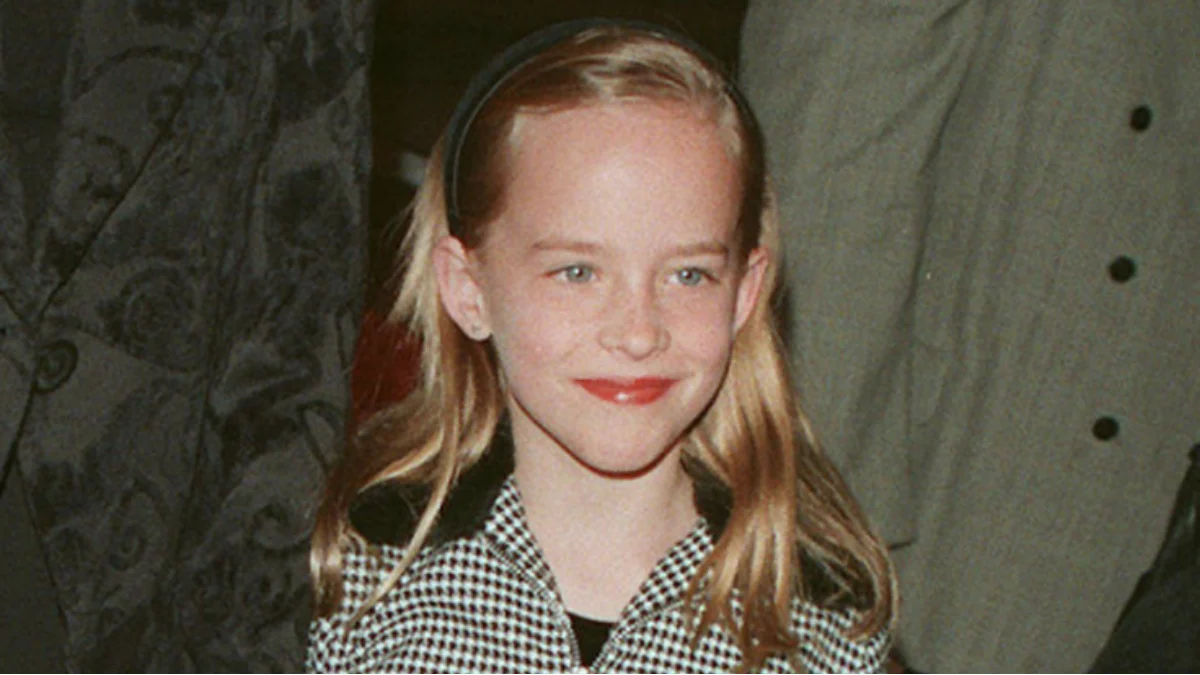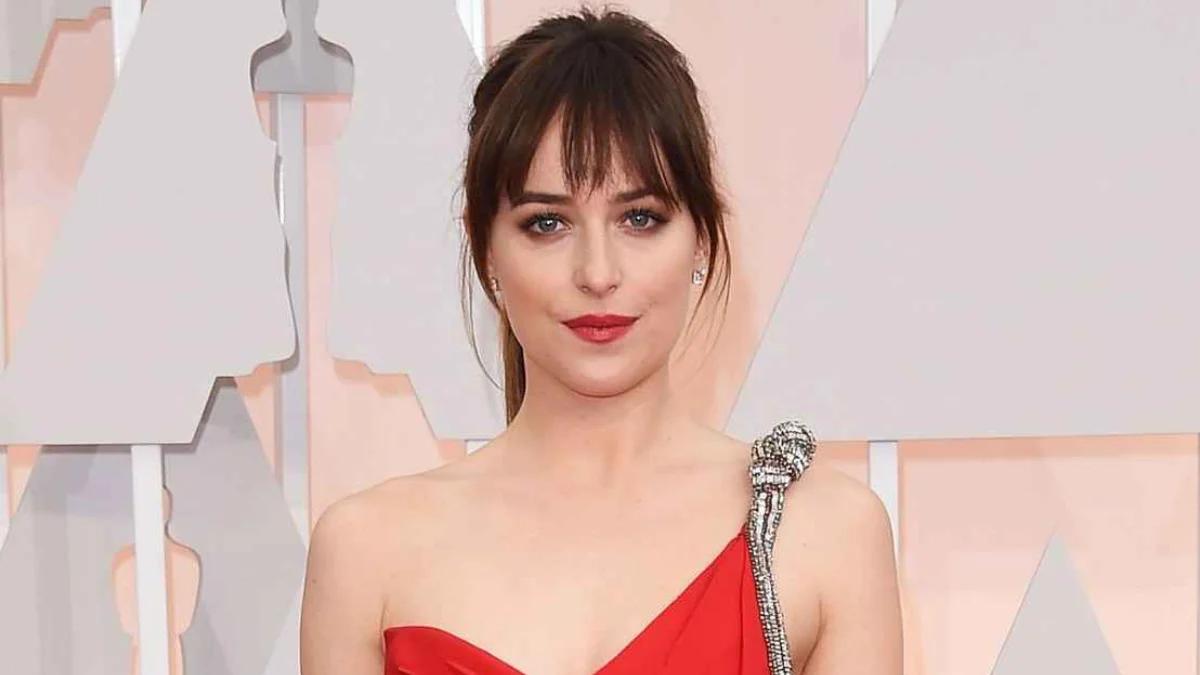
She appeared in her first film at age ten, playing the daughter of her real-life mother, in a movie her stepfather directed. Then she disappeared from screens for the better part of a decade.
When she came back, she spent years collecting small roles in films that came and went without much notice. Then she walked into an audition with a monologue from a 1966 Swedish art-house film, and everything changed.
Dakota Johnson’s career is not a straight line from a famous family to the red carpet. It is a long, winding, frequently surprising story of someone who kept making choices that nobody expected and slowly, stubbornly, built one of the most genuinely interesting filmographies in contemporary Hollywood.
Here is every chapter of it, from the very beginning to 2026.
Dakota Johnson’s Film Debut at Age Ten in Crazy in Alabama (1999)
Johnson made her film debut with a minor role in Crazy in Alabama, directed by her then-stepfather, Antonio Banderas, and also starring her mother, Melanie Griffith. She and her half-sister Stella Banderas played the daughters of their real-life mother on screen. It was a family affair in every conceivable sense, and it was not a hit. The film flopped at the box office and faded quickly.
Johnson’s film career started in 1999 when she was just a child. It would be nearly ten years before she returned to the big screen. Her parents had a firm rule. She was not allowed to work professionally until she graduated from high school. So after that one childhood cameo, she went back to school, kept moving between cities, changed schools seven times, and waited. She watched. She absorbed everything.
That early taste of a film set did not hand her a career. It gave her a reference point. And for years, it was the only one she had.
The Early Struggle Years: Social Network, Beastly, and Ben and Kate
After graduating from high school, Johnson took acting classes with teacher Tom Todoroff until 2008. She signed with the William Morris Agency and started her acting career. She had a minor role in David Fincher’s biographical film The Social Network in 2010 and also had a small role in the fantasy film Beastly in 2011.
The Social Network role was brief. She played Amelia Ritter, a flirtatious presence in a scene with Justin Timberlake’s Sean Parker. It was not the kind of role that changes careers. But the film itself earned eight Oscar nominations, and simply being inside that project put her name in front of the right people.

Also in 2012, she played a student at a prep school in Christopher Neil’s independent comedy Goats, starred in Nicholas Stoller’s romance film The Five-Year Engagement, and appeared in the comedy 21 Jump Street. She was accumulating credits, not headlines.
Then came Ben and Kate, her first real shot at a leading role, and the story of how she got it is one of the best accidental career moments in recent Hollywood history.
She explained the circumstances to Vanity Fair: “They had cast somebody else. They had the entire cast, and she fell out at the last minute. My agent called me in the morning and was like, ‘Can you be at Fox in forty-five minutes?’ So I went in and met with all of these people at this conference table. It was so crazy, and they told me about the show that they were basically going to start making in an hour. So I chose to go work on it.”
She got the role. Johnson had a brief stint in television, playing the lead role in the comedy Ben and Kate in 2012, but the show was canceled after one season. In 2013, she appeared as a new hire on the finale episode of The Office.
The show was gone. But she had proven she could carry a lead. And somewhere in a casting director’s memory, that registered.
How Fifty Shades of Grey in 2015 Changed Everything for Dakota’s Career
This is the audition that rewrote everything. And it started with a choice that nobody else in that room would have made.
Director Sam Taylor-Johnson would give every actress who auditioned for the role of Anastasia four pages to read from a monologue from Ingmar Bergman’s Persona. It was an unusual test for what most people assumed would be a mainstream studio film. Dakota did not just read the Bergman. She leaned into it entirely.
She revealed in a Vanity Fair interview that she performed a monologue from Ingmar Bergman’s psychological masterpiece Persona during her audition. “When I auditioned for that movie, I read a monologue from Persona, and I was like, ‘Oh, this is going to be really special,'” Johnson said.
Johnson won the role over Lucy Hale, Felicity Jones, Elizabeth Olsen, Danielle Panabaker, and Shailene Woodley. It was a fiercely competitive process, and she beat out an impressive list of her peers entirely on the strength of how she handled that audition room.
But before she accepted, she had a conversation with a friend who told her exactly what she needed to hear. “I remember I spoke to Emily Blunt, and I was like, ‘Should I do this trilogy? Because I want to have a really special career, and I want to make a certain kind of film. And I know that this is going to change things.’ She was like, ‘Fucking do it if it feels right. Just do it. Always do what you want to do.'”
She did it. And it did change things. Despite receiving generally unfavorable reviews from critics, the film was an immediate box office success, breaking numerous box office records and earning $569.7 million worldwide against a budget of $40 million. The full trilogy ultimately grossed over $1.3 billion worldwide.
The making of it, however, was not the experience Dakota had signed up for. On-set problems stemming from issues with the studio, directors, and the book’s author E.L. James, led to what the actress described as a “tricky” and “psychotic” process. “It was always a battle. Always.”
She got a People’s Choice Award and a Golden Raspberry for Worst Actress for the same role. She received a BAFTA Rising Star nomination and a Forbes 30 Under 30 listing in the same year she was mocked by critics. That contradiction tells you almost everything you need to know about what Fifty Shades was and what Dakota managed to extract from it. She came out the other side of the trilogy as one of the most recognizable women in Hollywood. And then she made a very deliberate decision about what to do with that recognition.
Dakota’s Critical Reinvention: Suspiria, The Lost Daughter, and Daddio
Most actors who break through in a franchise immediately chase the next big franchise. Dakota Johnson did the opposite. She went looking for the strangest, most demanding, most unexpected directors she could find.
Call Me by Your Name director Luca Guadagnino became a champion in Johnson’s career when he cast her in his 2015 psychological drama A Bigger Splash. An agent friend slipped him an early secret promo reel of Fifty Shades, and Guadagnino stopped in his tracks. He saw something in her that the critics of that film had missed entirely.
Then came Suspiria in 2018, a supernatural horror film set in Berlin that required her to train intensively in dance and carry one of the most physically and psychologically demanding roles of her career. She described working on Suspiria as “a tough one,” explaining, “It took so much prep time to learn the choreography, and I did pretty much all of my own dancing. That took a lot of dedication.”
Variety‘s Owen Gleiberman described her performance as someone whose “ambition seems driven by nothing so much as a pure desire to create.” That was not the kind of review she was getting for Fifty Shades.
Then came The Lost Daughter in 2021, directed by Maggie Gyllenhaal. Johnson described Gyllenhaal as a “force” and noted that “her emotional intelligence is like just coming through her pheromones,” adding that the director “made me explore so many different corners of myself.”
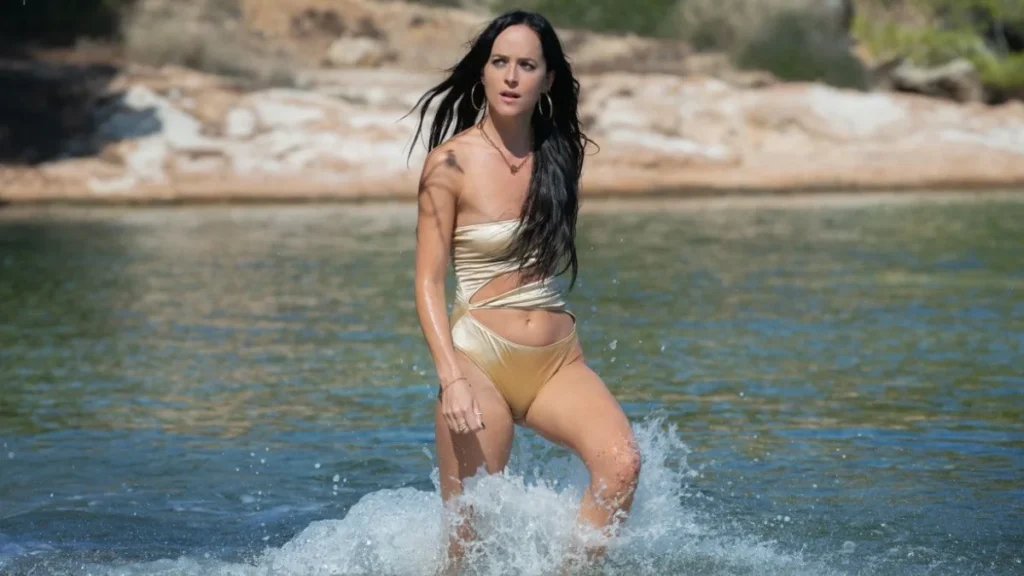
The Lost Daughter features arguably Johnson’s finest career performance in her supporting role as Nina, demonstrating her adeptness at portraying complex characters. Johnson strikes a delicate balance, exuding just enough menace to validate the threat her character represents while also infusing Nina with deep sensitivity.
Then came Daddio in 2023, a two-character chamber drama set almost entirely inside a New York taxi cab opposite Sean Penn. Johnson played a cab passenger who had an emotionally profound interaction with a cabbie in the film. Her performances in The Lost Daughter and Daddio were met with positive reception from critics and audiences.
Her production house, TeaTime Pictures, co-run with best friend Ro Donnelly, has backed films including Daddio, Am I OK?, and Sundance-winning Cha Cha Real Smooth. Johnson noted that the company focuses on “mostly female-driven, human experience projects.”
She was no longer just an actress. She was becoming a creative force behind the camera, too.
Where Dakota Johnson’s Career Stands in 2026: Materialists, Splitsville, and Verity
By 2025, Dakota Johnson was operating at a level that would have seemed impossible to predict from the Fifty Shades years. She had two films at the Cannes Film Festival simultaneously, a production company with a track record, and a rom-com that quietly became one of the most commercially successful indie films of the year.
Materialists is a 2025 American romantic comedy-drama written and directed by Celine Song, starring Dakota Johnson, Chris Evans, and Pedro Pascal. The film received generally positive reviews and grossed $108 million on a $20 million budget. That made it the first indie film of 2025 to cross the $100 million milestone at the worldwide box office. For a film that cost $20 million to make, that number is remarkable.
Splitsville, also from 2025, was the first time Johnson’s production company, TeaTime Pictures, had a film at Cannes, premiering in the Cannes Premiere section. She played Julie in the film, a character caught inside the complicated dynamics of an open marriage when a friend’s divorce destabilizes their friendship group.
Speaking about the current direction of her career, she said: “I’m so interested right now in romance and love, and how it can help people and save people and ignite some hope in people’s hearts.”
And then there is Verity, coming in 2026. She played the title role in the superhero film Madame Web in 2024, which was critically and commercially unsuccessful. Speaking about the film’s failure, Johnson went on to say: “We don’t have control over how something turns out. I signed on to a movie that, by the end of shooting it, was a completely different script than what I attached to, and that is a crazy journey to go on as an artist.”
Next up is Michael Showalter’s Verity, a rare erotic thriller for the director of largely comedic indie films. And beyond that, her long-awaited feature directorial debut is still in development. She said of directing: “I feel like I’ve always felt that I’m not ready to direct a feature. I don’t have the confidence, but with this project, I feel very protective, and I know it well. I just won’t let anybody else do it. That really is the real answer.”
From a ten-year-old playing her mother’s on-screen daughter in a film that nobody remembered, to producing films at Cannes and crossing $2 billion in cumulative worldwide box office, the cumulative total of all films featuring Dakota has surpassed $2.03 billion worldwide. The arc of that career is not the one that was written for her by her family name or her Fifty Shades fame. It is the one she built herself, one unexpected choice at a time.