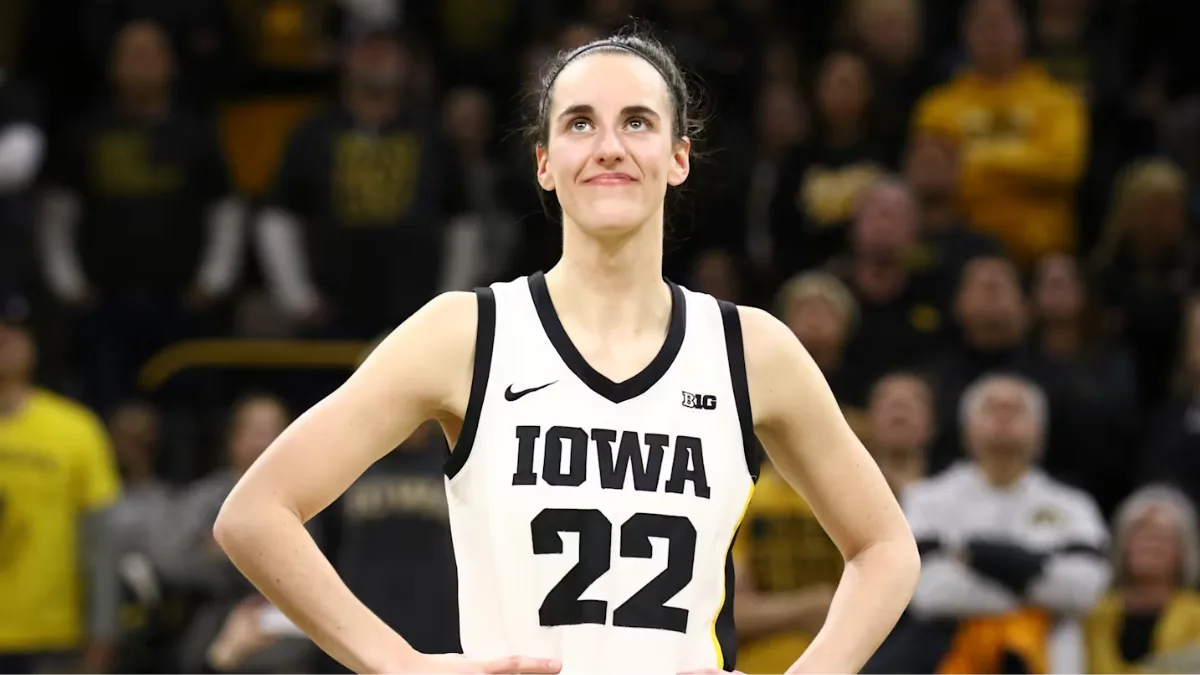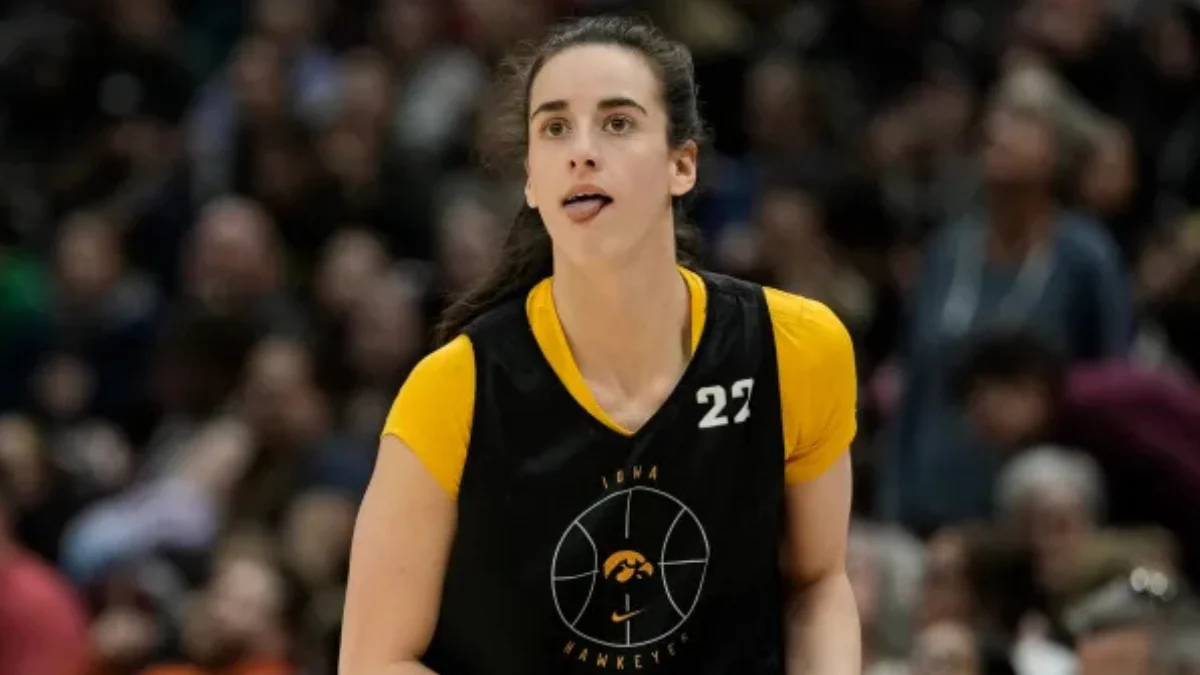
She walked into the University of Iowa as a freshman from West Des Moines. She walked out four years later as the greatest scorer in the history of college basketball, men’s or women’s. No one had ever done what Caitlin Clark did at Iowa, and the numbers alone do not tell the full story.
She did not just break records; she shattered them, collected major national awards back to back, built one of the most-watched rivalries in college sports history, and single-handedly pushed women’s basketball into prime time television.
By the end of her senior season, nearly 19 million people were watching her play on a Sunday afternoon in April.
So how did a kid from Iowa become the most-talked-about college basketball player of a generation? The answer starts the moment she steps on the court.
How Clark Became the Most-Watched College Basketball Player in History
Clark is credited with popularizing women’s basketball during her college career at Iowa, a phenomenon widely referred to as the “Caitlin Clark effect.” It was not just hype. The numbers backed it up at every turn.
Before her senior season, her team set the women’s basketball attendance record, with 55,646 fans packing Kinnick Stadium for a preseason exhibition game. That was not a regular-season game. That was not March Madness. That was a preseason warmup, and it drew more fans than most programs see all year.
The Iowa women’s basketball program sold out its entire 2023-24 ticket slate and generated $3.26 million in ticket sale revenue, the most in history by a women’s college basketball team. Fox Sports even assigned a dedicated camera, called the “Caitlin Cam,” solely to follow her during broadcasts. Her games were no longer just sports events. They were cultural moments.

Season-by-Season Statistical Breakdown at the University of Iowa
Clark did not ease into college basketball. She announced herself immediately. During her first season, she led the entire country in scoring at 26.6 points per game and was named Big Ten Freshman of the Year, first-team All-Big Ten, and first-team All-American by both the USBWA and the WBCA.
Her sophomore and junior seasons continued the upward trajectory. She tied Elena Della Donne as the fastest player to reach 2,000 points in Division I history and achieved both the Iowa and Big Ten single-season scoring records. She was also doing things statistically that no one else had ever managed, totaling over 900 points and dishing out over 300 assists in a single season, a historic feat never previously accomplished in college basketball history.
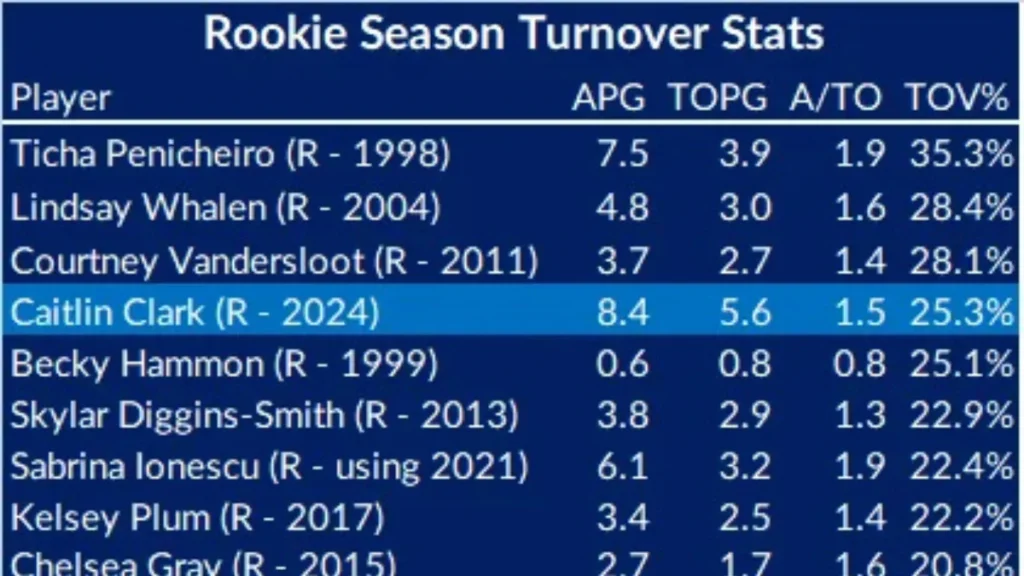
Her senior season was the crescendo. On February 15, 2024, Clark became the NCAA Division I women’s career scoring leader, surpassing Kelsey Plum during a 106-89 win over Michigan, finishing that game with a career-high 49 points, 13 assists, and five rebounds. Then, just days later, she went even further. On March 3, 2024, Clark surpassed “Pistol Pete” Maravich to secure the all-time Division I scoring title across both genders, and just five days later broke Stephen Curry’s NCAA single-season three-pointer record against Penn State.
She finished her career with the highest scoring average in Division I history at 28.42 points per game, along with the most career points at 3,951, the most career three-pointers at 548, and the third-most assists at 1,144.
NCAA Tournament Performances That Defined Her Legacy
If regular season records built Clark’s reputation, the NCAA Tournament is where she carved out her legacy in stone.
She became the first player in men’s or women’s NCAA tournament history to record both a 30-point and a 40-point triple-double. She did not do it once. She is the only player since 2003 to have 40 points and 10 assists in an NCAA Women’s Tournament game, and she did it twice.
Over her tournament career, Clark also broke the NCAA tournament career records for assists and three-pointers, held previously by Temeka Johnson of LSU and Diana Taurasi of UConn, respectively. She was not just surpassing her contemporaries. She was erasing the names of all-time greats from the record books.
Clark became the first Division I college basketball player, men or women, to have 3,000 or more points, 900 or more assists, and 800 or more rebounds in a career. That combination of scoring and playmaking at elite levels simultaneously is what made her genuinely different from anyone who came before.

Individual Awards and Honors: Naismith, Wooden, and AP Player of the Year
The hardware reflected the dominance. In her junior and senior seasons, Clark swept virtually every major national award available to a college basketball player.
In her senior year, she was named AP Player of the Year, won the Honda Sports Award, the John R. Wooden Award, the Naismith College Player of the Year, the USBWA National Player of the Year, and the Wade Trophy. She had won most of those same awards the year before, too.
She became the first two-time winner in the James E. Sullivan Award’s 94-year history, an award presented annually by the AAU to the top college or Olympic athlete in the United States. She also became only the third athlete ever to repeat as Big Ten Female Athlete of the Year.
Clark was the first Iowa women’s basketball player ever named First Team All-Big Ten in all four years of competition. She was also named Big Ten Tournament MVP for three consecutive tournaments, a feat achieved by only one other player since 1995.
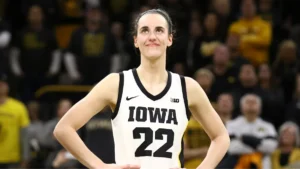
Iowa later retired her No. 22 jersey, a formal acknowledgment that no one who came after her could be asked to carry that number.
The 2023 NCAA Final and the Angel Reese Rivalry
No story about Caitlin Clark college career is complete without the night in Dallas that changed everything.
LSU defeated Iowa 102-85 in the 2023 national championship game, with Reese putting up 15 points and 10 rebounds and earning Most Outstanding Player of the tournament. Clark led all scorers with 30 points, but it was not enough.
The moment that ignited a national conversation came in the final minutes. Reese taunted Clark by pointing to her ring finger and performing the John Cena “you can’t see me” gesture directly in Clark’s face, a callback to Clark using the same gesture during Iowa’s Elite Eight win over Louisville.
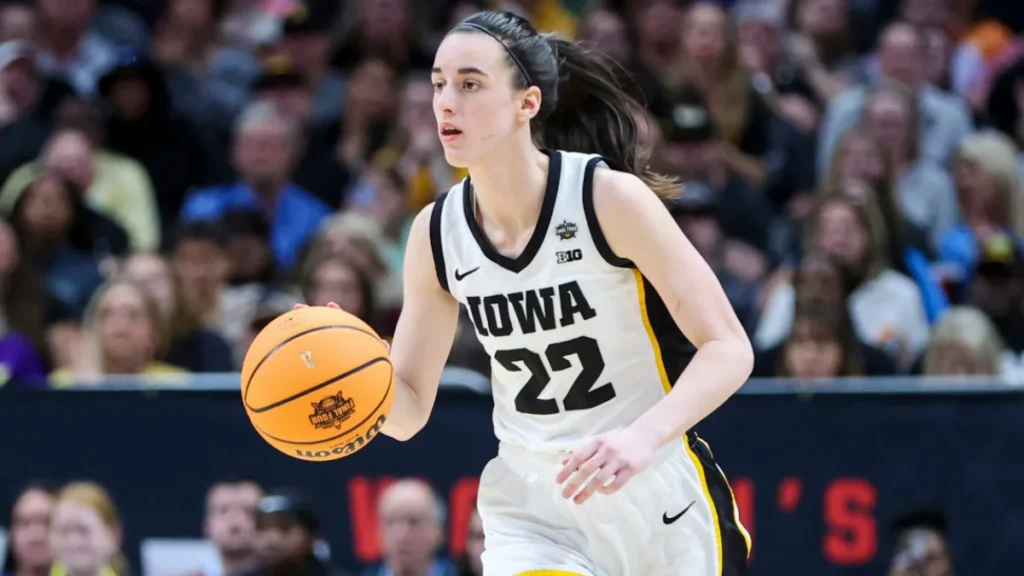
What followed was a firestorm. Some commentators asserted that Reese faced harsher criticism from fans because she is Black. At the same time, Clark, who is white, had not received the same level of scrutiny for the identical gesture earlier in the same tournament. The conversation around the rivalry went far beyond basketball.
Despite the noise, both players consistently showed mutual respect off the court. Clark herself said after the game, “I don’t think Angel should be criticized at all.” The rivalry was competitive and fierce, but it was also, as both players acknowledged publicly, never personal.
With an average of 9.9 million viewers, the 2023 championship game became, at that time, the most-watched women’s college basketball game in history. The rivalry had already transformed the sport before either player had played a single WNBA game.
The 2024 Championship Run and the 18.7 Million Viewers Moment
One year later, the rematch everyone had been waiting for arrived.
In the 2024 Elite Eight, Clark recorded 41 points and 12 assists as Iowa defeated LSU 94-87, while Reese had 17 points and 20 rebounds before fouling out after rolling her ankle. That game drew an average audience of 12.3 million viewers, making it the most-watched college basketball game ever broadcast on ESPN platforms.
Iowa advanced to the national championship game for the second straight year, this time facing undefeated South Carolina. Clark scored 18 points in the first quarter alone, the most by any player in a single period in championship game history. She finished with 30 points, but South Carolina proved too strong, winning 87-75.
The championship game drew an average of 18.7 million viewers, shattering the record set the year before. To put that number in context, that is more than the average viewership of most NBA Finals games and comparable to major primetime network television. Women’s college basketball had never seen anything like it, and it was built almost entirely around one player.
Why Clark Chose the WNBA Over Her Final Year of Eligibility
With one year of NCAA eligibility remaining, Clark had a choice. She could return to Iowa for another season, chase more records, and extend one of the most celebrated college careers in the sport’s history. She chose not to.
On February 29, 2024, Clark announced she would enter the 2024 WNBA Draft rather than use her final year of college eligibility. The timing made perfect sense. She had already broken every record worth breaking. She had won two consecutive national player-of-the-year awards. She had appeared in two championship games and driven women’s basketball into mainstream American culture.
There was nothing left to prove at the college level. The WNBA was the next frontier, and the Indiana Fever selected her with the first overall pick. The “Caitlin Clark effect,” as it became known, transferred immediately to the professional game as well.
Her college career stands as something genuinely rare in sports: a four-year run that did not just produce statistics and trophies, but fundamentally changed the perception and popularity of an entire sport. The records will likely stand for a generation. The cultural impact may last much longer.