
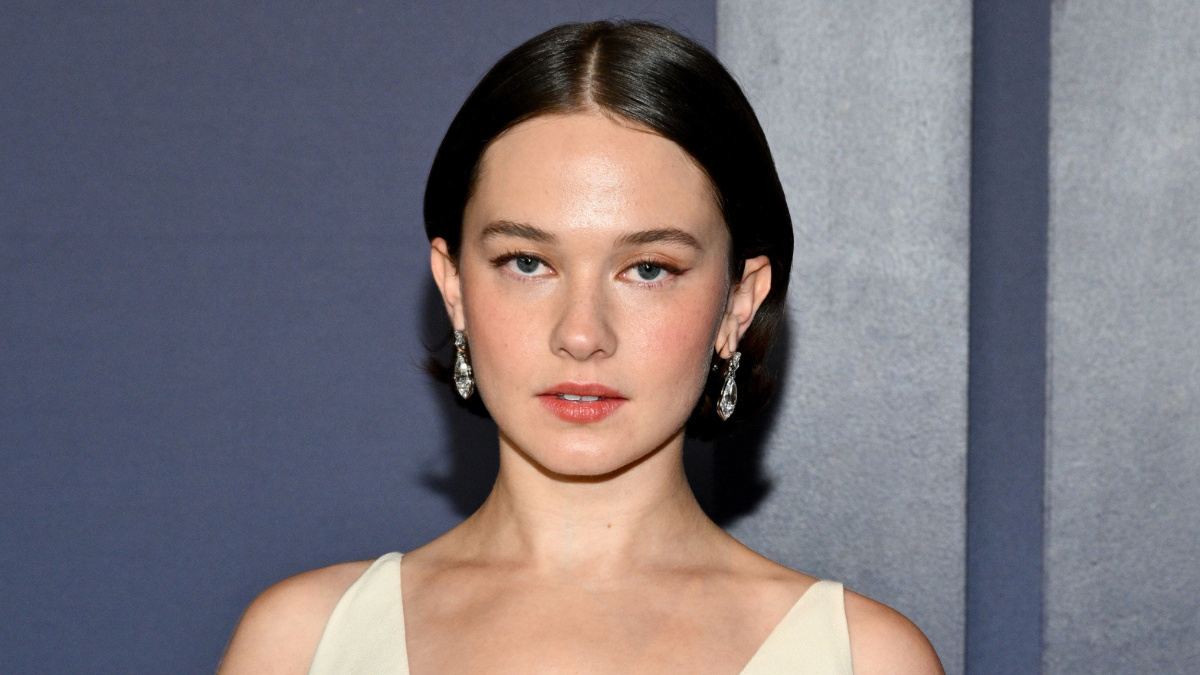
There is a version of Cailee Spaeny’s story where leaving school at 13 looks reckless. A child from a Southern Baptist family in Springfield, Missouri, convinces her parents to let her abandon a formal education in pursuit of a career that had given her nothing yet but community theater roles and birthday party gig money.
That version of the story misses everything important. “Schooling wasn’t the foremost thing in my mind. It was always like: OK, I don’t fit in this box of ‘You have to be good in school.’ I’m not. I’m failing every class, and I’m in sixth grade,” she said. She was not walking away from something she had. She was walking toward the only place she had ever felt like herself.
And what she built in the years between dropping out and landing her first Hollywood role, the theater training, the independent film study, the live performance experience, turned out to be a more rigorous education than most acting schools could offer.
Here is exactly how she did it.
Early School Struggles and Disengagement
The disconnect between Cailee Spaeny and traditional schooling started long before she made any formal decision about it. It was not a sudden rebellion. It was a slow drift toward something that made more sense to her.
As a child, she was indifferent toward school but avid about performing. Those two things ran in opposite directions from the beginning. Every hour spent in a classroom was an hour not spent on a stage. The academic path felt irrelevant in a way she could not articulate yet, but understood completely.
She found it difficult to focus on her schoolwork, often struggling with her grades, because her true calling lay elsewhere. This was not laziness. This was a child whose attention was already oriented entirely toward something her school had no structure for.
“I knew at such a young age that I was going to commit my life to something else. I don’t know where that came from. It felt like there was some higher power or being that touched me and said, ‘This is what you’re going to do.’ That sounds so corny, but I don’t know how else to explain it,” she told Flaunt. That certainty, arriving that early and that completely, made sitting in a classroom feel like waiting. And she had never been good at waiting.
The Decision to Drop Out at Age 13
The formal break from school came at 13, but it had been building for years. By the time she made the decision, the question was not really whether she would leave. It was whether her parents would let her.
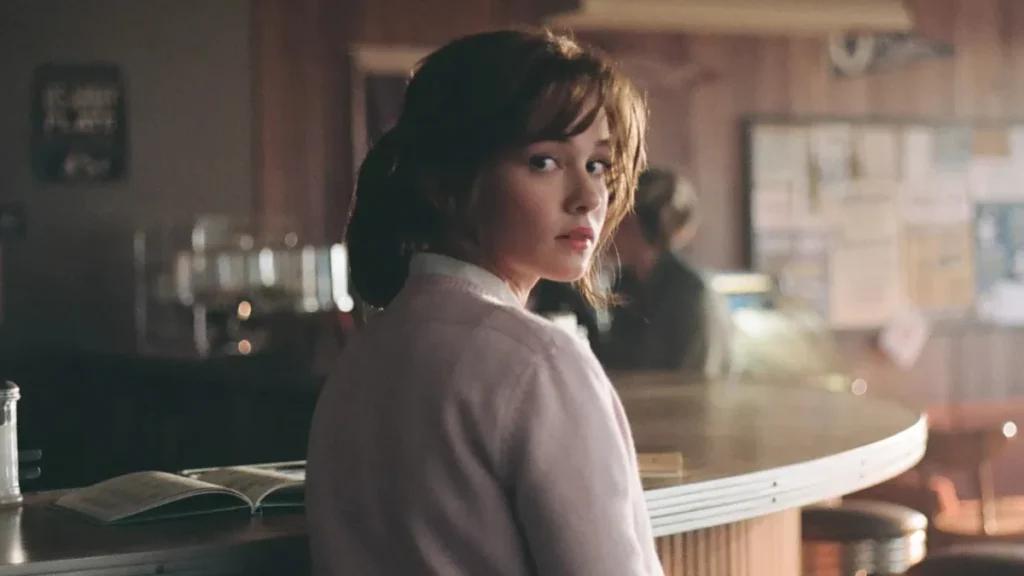
Wanting to devote all her time to pursuing an entertainment career, she persuaded her parents to let her drop out of school at age 13. Persuaded is the right word. This was not a family that simply nodded along. In a household with nine children, a deeply held faith tradition, and a clear set of expectations about what a responsible life looked like, a 13-year-old asking to leave school entirely required a real argument.

She made that argument. Her career aspirations cemented, Spaeny refused to keep up with her homeschooling and committed to becoming a professional actor around this time. The refusal was the decision. Once she stopped engaging with even the homeschool structure, the family had to choose whether to fight it or redirect it.
They redirected it. And years later, speaking about the parallel she saw between her own story and Priscilla Presley’s, she said something that explains the weight of that moment for everyone involved. “Like Priscilla’s family, my family made incredible sacrifices to support that decision. And you’re not only having to get it right for yourself, but also make sure that you don’t let them down.” The pressure of that, of carrying not just her own dream but her family’s trust in that dream, never really left her.
Parents’ Role in Supporting That Choice
What makes the Spaeny family story genuinely unusual is not that a teenager wanted to pursue acting. Thousands of teenagers want that every year. What is unusual is that her parents, in a strict religious household in the Midwest, said yes and then put everything behind that yes.
“Every summer, I went out to Los Angeles. I was begging my mom to take me. There were times my mom didn’t know if we could afford to go out there, but she didn’t want to tell me. She was praying every night, ‘Please let something happen,'” Spaeny told 417 Magazine.
Her mother drove her across the country in the family minivan, with two younger siblings in the back seat, for four consecutive summers. She began making regular 25-hour road trips from Springfield to California with her mother and two younger siblings to attend auditions. They stayed with friends. They stayed in budget motels. They took whatever they could find to make the trip work, because the alternative was telling a daughter with absolute certainty in her calling that the money had run out.
Cailee’s mother described her daughter’s Hollywood recognition as “a pretty big deal for a little girl from Springfield.” That is a mother who watched years of sacrifice and faith pay off in a way she had quietly prayed for but could not have been certain would arrive.
The support from her parents was not naive or unconditional. It was earned, negotiated, and maintained year after year through a combination of Cailee’s determination and her family’s willingness to keep believing in something that had not yet produced a single professional result.
Community Theatre as Her Real Classroom
Once school was out of the picture, Cailee replaced it with something far more demanding. She spent a large amount of time in the Springfield Little Theatre group, with which she participated in many plays. She also took acting, voice, and dance classes six days a week at the Springfield Little Theatre group.
Six days a week. Not casually. Not as an extracurricular. As a schedule. As a commitment that treated the craft with the same seriousness a full-time student would give to their education, because for her, it was.
“I was there probably six days a week just taking dance classes, vocal lessons, acting classes,” she confirmed in a separate interview. The repetition across multiple sources makes the point clear. This was not dabbling. This was training.
The Springfield Little Theatre was also not a soft environment. She has been precise about this in multiple interviews, clearly aware that the mention of community theater often gets dismissed by people who assume it means low stakes and easy praise. “No one gave me the easy way out in Springfield, even though people think of it as a smaller town. It was very tough at the Little Theatre. You had to be really good and work really hard.”

She landed lead roles there that required genuine range: Ariel in The Little Mermaid Jr., Dorothy in The Wizard of Oz. Both demand a young actor who can carry a production, not just fill a supporting role. By the time she was a teenager, she had played leads on a real stage, in front of real audiences, inside a program that did not hand out parts as participation trophies.
“I started working in a professional setting at 13, just surrounded by adults,” she told Empire magazine. That environment, being the youngest person in the room by years, watching professionals work, absorbing technique and discipline through proximity, is something no formal school curriculum could have replicated.
Studying Film History Independently
Between audition seasons and theater productions, Cailee built a self-directed education in cinema that most film school graduates would recognize as serious scholarship.
While she was waiting for Hollywood to call, she undertook a personal study of film history, watching as many movies as she could. She was not watching randomly. She was watching with a specific purpose.
“I just wanted to know the difference between the subtleties of different genres, and what would make an ’80s action film work in terms of performance, or a small indie movie,” she told Empire. “That was my teacher. I didn’t go to an acting school.”
That is not a passive viewer describing what they liked. That is a student describing a methodology. She was reverse-engineering performances, studying how genre shapes acting choices, understanding why something works in one context and falls flat in another. At 14 and 15, without a teacher or a syllabus, she was doing the analytical work that formal acting programs spend semesters on.
At age 14, she was particularly struck by The Virgin Suicides, Sofia Coppola’s adaptation of a Jeffrey Eugenides novel about five sisters growing up in a strict religious household. “Especially growing up in southern Missouri in the church, I felt like no one had ever really seen or accepted the teen angst a girl can have, the sadness within young teenage girls,” she told InStyle. “It wasn’t until I watched Sofia’s films that I was like, ‘Oh, someone has acknowledged that you can be a young, cute girl but also have real darkness and angst in you.'”
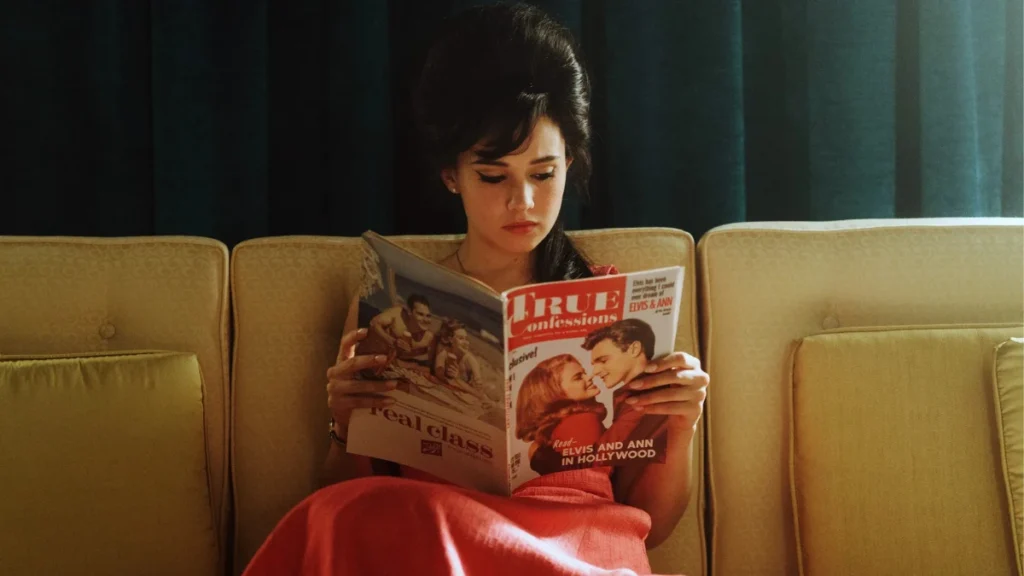
That film, watched alone by a teenager in Missouri, planted a seed that would grow into one of the defining professional relationships of her career. A decade later, Sofia Coppola would offer her the role of Priscilla Presley over breakfast in New York.
Silver Dollar City Performances as Practical Training
Alongside the theater training and the self-directed film education, there was one more piece of the curriculum that most people overlook. She performed in A Dickens Christmas Carol at Silver Dollar City for seven years.

Silver Dollar City is an 1880s-themed amusement park near Branson, Missouri. The audiences there are not people who showed up to see Cailee Spaeny specifically. They showed up for a theme park experience, and she was part of it. Which means she had to earn their attention every single time, in every single performance, without the benefit of a captive audience or a sympathetic crowd.
The first acting she did was through her homeschool co-op, and soon after, at Silver Dollar City when she was 13. Seven years of holiday performances at a theme park, playing the same production season after season, builds a specific kind of discipline. You learn to find something new in the material because the alternative is going through the motions, and going through the motions in live performance is something audiences can feel, even if they cannot name it.
It is not the training anyone imagines when they picture a future Venice Film Festival winner preparing for her career. But it trained consistency, it trained presence, and it trained the ability to deliver emotionally honest work in environments that are not designed to support it.
What Her Non-Traditional Path Taught Her
When Cailee Spaeny arrived on the set of Pacific Rim: Uprising at 18, she had never been on a professional film set before. She had never worked with a call sheet. She had never left the country.
“I never took an acting class growing up, so being on set is like taking an acting class. Except it’s filmed and immortalized forever onscreen, and you can’t take it away. I got really lucky, because I started at 18 and I got to just be a fly on the wall watching these greats act, and I got to take all that in,” she said.
That quote holds a lot. The honesty about what she did not have, the formal training, the institutional credentials, sits right next to the recognition of what she did have: years of live performance, six days a week of disciplined craft development, a self-taught film education built movie by movie, and the specific resilience that comes from driving 25 hours across the country to hear no for four straight years.
“Don’t underestimate a determined fourteen-year-old girl. They’re the most powerful thing on earth,” she said in V Magazine, describing both Priscilla Presley and herself in the same breath.
Her non-traditional education did not give her the things formal training promises. It gave her something harder to manufacture: the knowledge, bone-deep and tested by years of real experience, that she could walk into any room, any set, any genre, and find a way to make it work. Hollywood eventually confirmed what Springfield had been building all along.







1 thought on “Cailee Spaeny Education: Why She Left School at 13 and What She Did Instead”