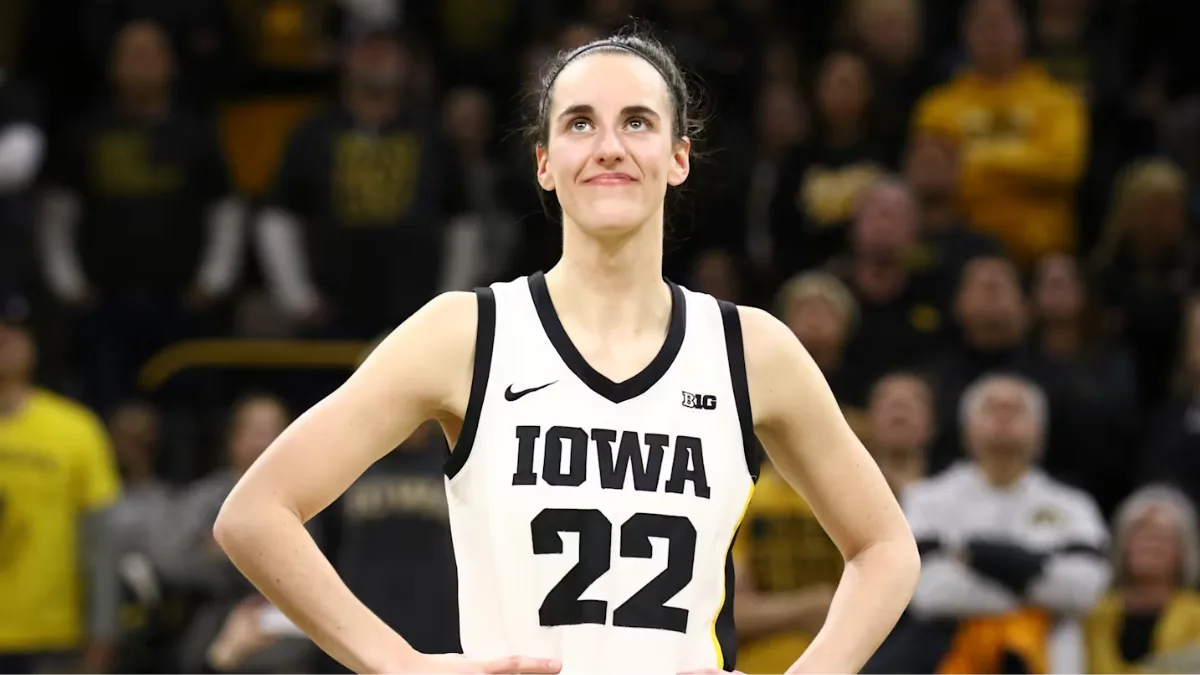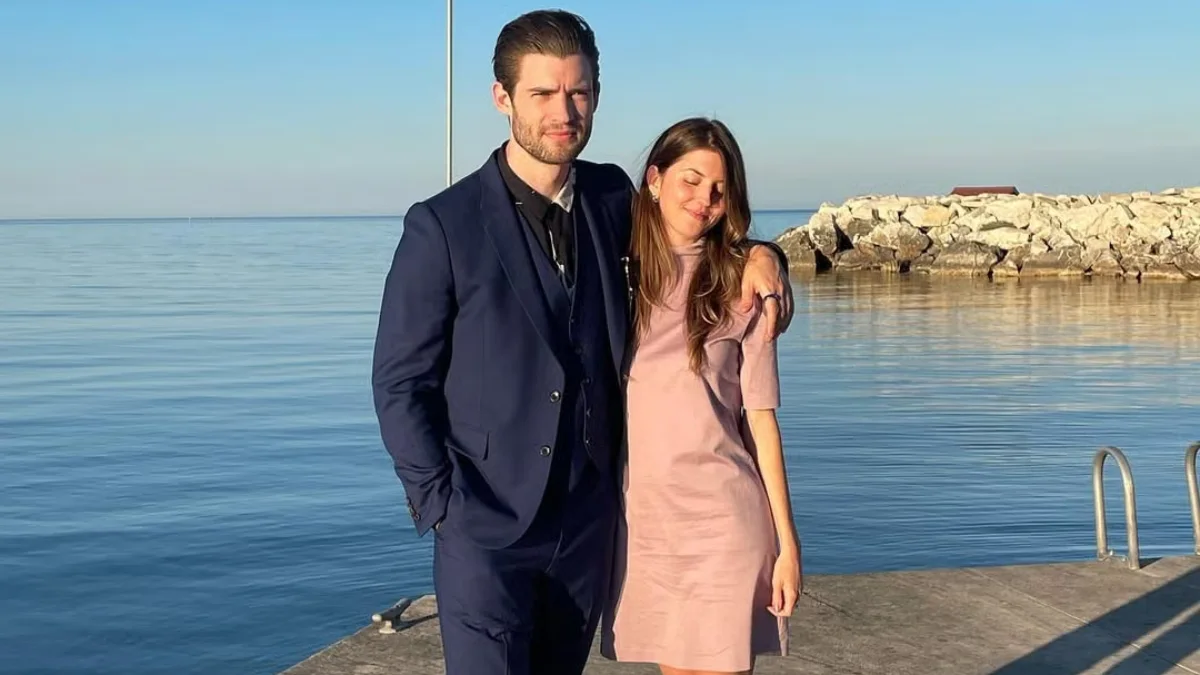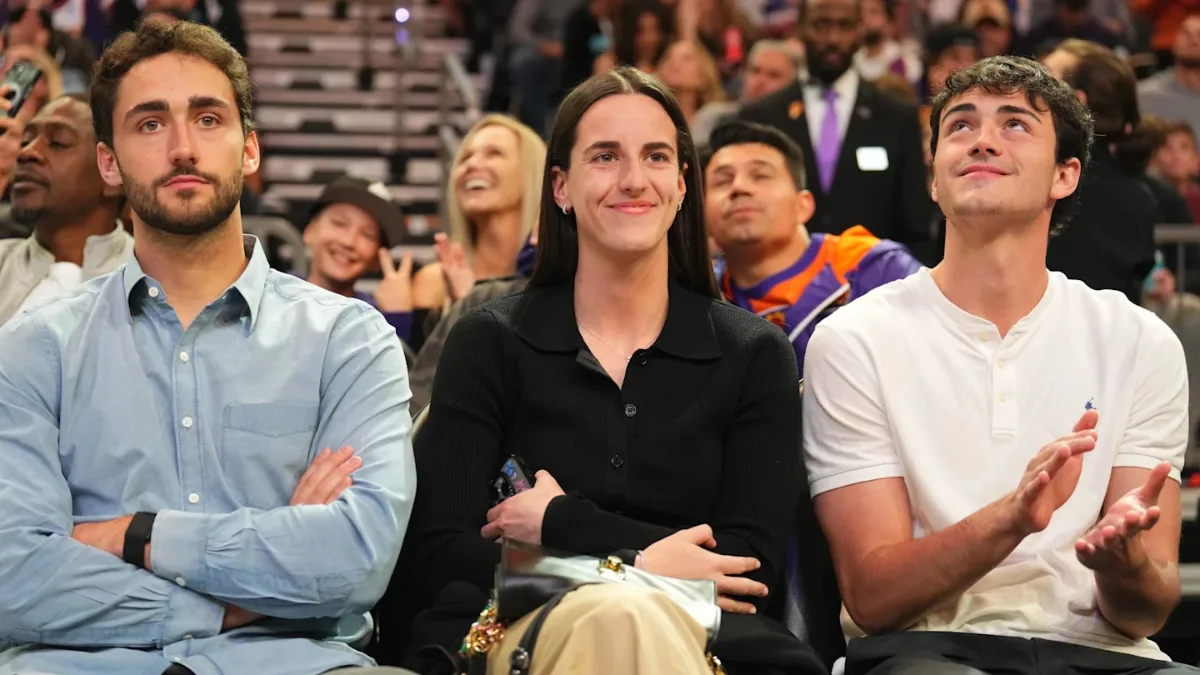
Before the packed arenas, before the record books, and before millions of fans worldwide knew her name, Caitlin Clark was just a kid from West Des Moines who refused to sit still.
Her mother, Anne, once said of her, “She’s not one to sit around. She likes to just go. She would ask her dad, ‘Let’s go hit golf balls,’ or ‘Let’s throw the football.'” That relentless energy, tucked inside a competitive household in Iowa, would quietly shape one of the most extraordinary athletic journeys in modern sports history.
What most people see today is the finished product, the record-breaking scorer, the WNBA star.
But the story of how Caitlin Clark became Caitlin Clark begins long before she ever stepped foot on a college court. It begins at age five, in a backyard, with a basketball and two brothers who wouldn’t take it easy on her.
Growing Up in West Des Moines: An Athletic Household
Caitlin Elizabeth Clark was born on January 22, 2002, in Des Moines, Iowa, to Brent Clark, a vice president at a product company, and Anne Clark. Her mother’s father was the football coach and a school administrator at Dowling Catholic High School in West Des Moines.
That athletic DNA ran deep throughout the entire family tree. The Clark family has a rich athletic tradition, with eleven relatives having played college sports, laying the groundwork for Caitlin’s path to basketball stardom. Her father, Brent, played both basketball and baseball at Simpson College. Her older brother, Blake, went on to play college football for Iowa State. Her cousin Audrey Faber played college basketball for Creighton.
Sports weren’t just a hobby in this household. They were a language. Blake Clark once reflected on their upbringing, saying the family was always involved in sports and constantly surrounded by it, watching games at night and attending tournaments. He noted that when you’re around something that much, it simply becomes what you do.
Caitlin’s younger brother Colin recalls their childhood one-on-one basketball games, where they would push each other to their limits. These early experiences in their West Des Moines home laid the foundation for Caitlin’s work ethic and competitive spirit. Even Blake, with a touch of humor, acknowledged how intense those family games were growing up.
Why Clark Played on All-Boys Teams as a Child
Here’s where the story gets interesting. Caitlin began playing basketball at age five and competed in boys’ recreational leagues because her father could not find a girls’ league for her age group.
Rather than wait around, she simply played where the competition existed. And she held her own.
Because of limited opportunities for girls’ basketball players, she played on an all-boys team in elementary school. This wasn’t a novelty; it was a necessity that ended up being one of the best things that ever happened to her development. Playing against boys who were bigger, faster, and more physical at that age forced her to be smarter, sharper, and more creative with the ball.
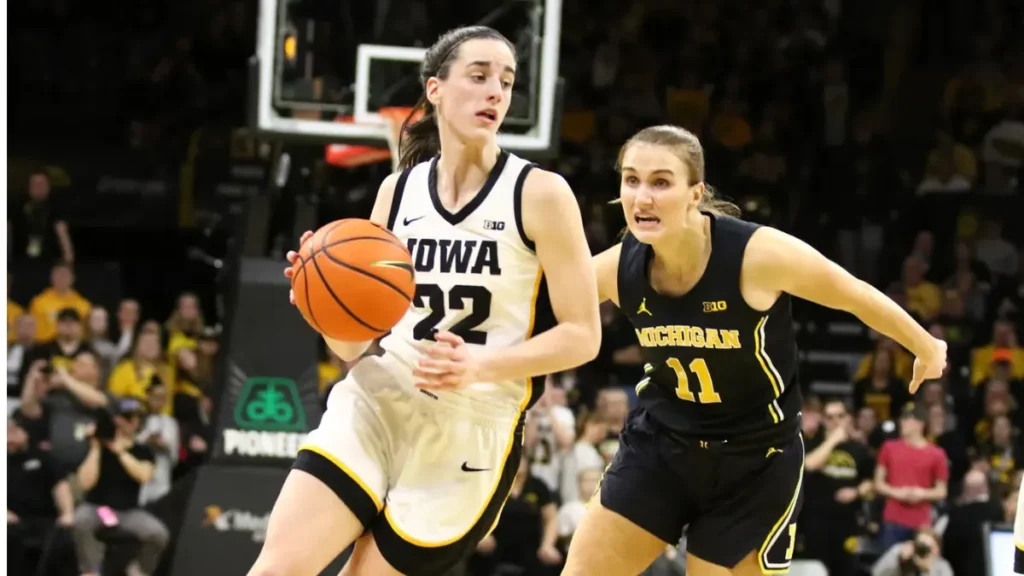
Her grandfather recalled that, by the time Clark was five years old, she could already dribble a basketball and displayed great anticipation on the court. That anticipation, that ability to read the game before it unfolds, is still one of the most defining parts of her game today.
By age thirteen, the competition gap had flipped. She began playing several years ahead of her age group in girls’ leagues. She wasn’t just keeping up anymore. She was dominating.
Multi-Sport Athlete: Soccer, Softball, Tennis, Golf, and More
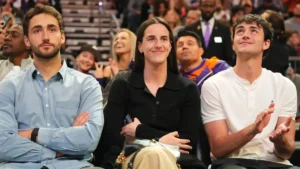
Before basketball became her everything, Caitlin Clark was genuinely good at almost everything she tried. Clark also played softball, volleyball, soccer, tennis, and golf as a child before focusing on basketball.
She tried many different activities, including volleyball, soccer, softball, tennis, and even piano, but fully committed to basketball around sixth grade. The piano might not have stuck, but the discipline behind trying it all did.
Golf, in particular, stayed with her. Clark is an avid golfer, having played the sport since childhood. It’s no surprise. Golf demands patience, precision, and mental toughness under pressure, qualities that translate seamlessly to the basketball court.
The multi-sport background isn’t just a fun biographical detail. Research consistently shows that athletes who play multiple sports in their youth develop better coordination, sharper spatial awareness, and superior decision-making under pressure. For Clark, those years bouncing between soccer fields and tennis courts quietly built the athletic foundation that would later make her one of the most fluid and instinctive players ever to play basketball.
The Dowling Catholic Years: Freshman Emergence to Senior Scoring Record
When Caitlin Clark walked into Dowling Catholic High School in West Des Moines as a freshman, she didn’t ease into things. As a freshman in 2016, she averaged 15.3 points, 4.7 assists, and 2.3 steals per game, leading Dowling to a 19-5 record and earning Class 5A All-State third-team honors.
She then kept accelerating. She boosted her scoring average to 27.1 points per game as a sophomore, helping Dowling to a 20-4 record while earning Central Iowa Metro League Player of the Year and Class 5A All-State First Team honors.
By her junior season, she had become something else entirely. Clark led the state in scoring as a junior, averaging 32.6 points, 6.8 rebounds, 3.6 assists, and 2.3 steals per game. She was named Iowa Gatorade Player of the Year and earned the Class 5A All-State first-team selection.
Her senior year was arguably even more staggering. Clark averaged 33.4 points, eight rebounds, four assists, and 2.7 steals per game, leading the state in scoring for a second consecutive time.
Clark finished her high school career with 2,547 career points, fourth in Iowa girls’ five-on-five basketball history, and 283 made three-pointers, sixth all-time.
Her principal at Dowling Catholic, Matt Meendering, said it best. He recalled a moment when Clark helped clean up the student section of the bleachers after a football game when others had already left. “That was the kind of kid she was, and is,” he said. “It’s about leaving something better than when you got there.”
AAU Basketball and the Path to Becoming a Five-Star Recruit
Away from the high school court, Clark was simultaneously building her national profile through AAU basketball. In sixth grade, she joined All Iowa Attack, an Amateur Athletic Union basketball program based in Ames, Iowa, and played for teams in the program until graduating from high school. Her AAU teammates included future WNBA player Ashley Joens.
All Iowa Attack was a powerhouse program that produced at least six NCAA Division I recruits in the high school class of 2023.
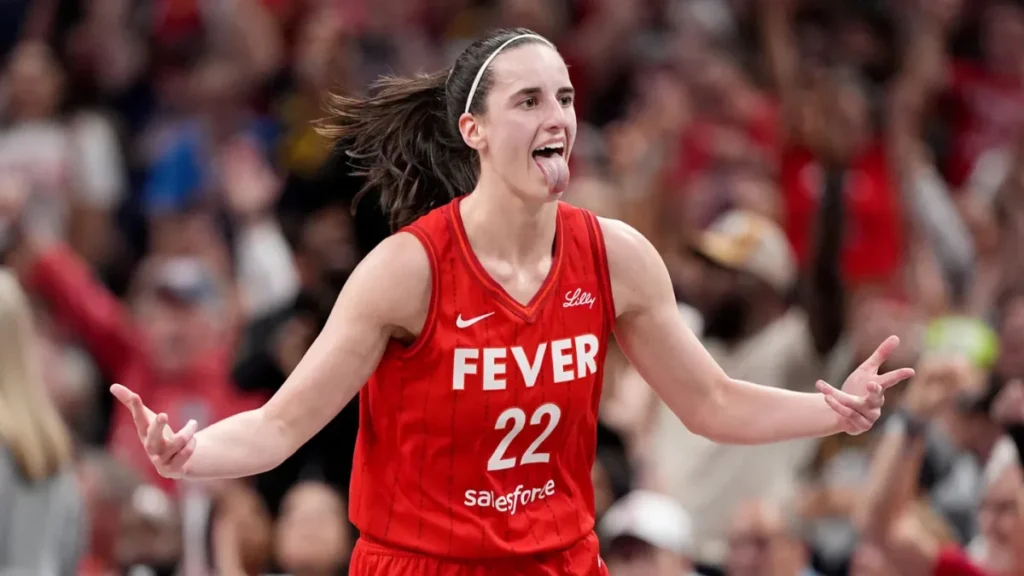
The recruitment letters, remarkably, started arriving when she was just in seventh grade. Clark reflected on how she was playing up two years and competing with high schoolers at that point, but said she didn’t think much of it and was just focused on going out and having fun playing basketball.
By the time she finished high school, the attention was impossible to ignore. She was rated as a five-star recruit and ranked the fourth-best player in the country in her senior year. According to her former high school coach, a Big 10 scout once said she could have started for their college team at just 14 years old.
She was also selected to play in the McDonald’s All-American Game and the Jordan Brand Classic, two of the most prestigious high school basketball events in the country. Both events were ultimately canceled in 2020 due to the COVID-19 pandemic. The recognition was there regardless.
Why Clark Chose Iowa Over Notre Dame and Other Elite Programs
This is the part of the story that most people don’t know. Caitlin Clark almost wasn’t a Hawkeye at all.
Clark was down to two schools when she made her college commitment back in 2019: the Iowa Hawkeyes and the Notre Dame Fighting Irish. She had visited Oregon and Texas and liked both, but felt they were simply too far from home.
Notre Dame, on the other hand, felt different. Clark said on ESPN’s Full Court Press documentary that her family is Catholic and that everyone idolizes Notre Dame. She even told legendary Notre Dame coach Muffet McGraw that she was going to play for her.
There was actually a verbal commitment to the Fighting Irish. But something didn’t feel right. Clark later admitted that she could feel it in her gut that she wasn’t supposed to go to Notre Dame.
McGraw herself later confirmed the hesitation. The former Notre Dame coach revealed that Clark’s commitment always felt soft, saying Clark couldn’t decide and that when she finally said she wanted to come, it wasn’t a confident declaration. When the announcement finally came, Clark was going to Iowa. McGraw added that Clark called her first to deliver the news personally, which she described as a classy move.
So why Iowa? Clark explained that Iowa had been performing well in women’s basketball but hadn’t reached the Final Four since 1992. She wanted to go somewhere that was good but hadn’t been a blue blood in a while, and help them get back to that level.
Iowa’s style of offensive play, coach Lisa Bluder’s ability to develop point guards, and the immediate opportunity created by the departure of Kathleen Doyle all played a role in Clark’s final decision.
She also wanted to stay close to home. Iowa was two hours from West Des Moines. As Clark put it, it was the perfect distance where her parents couldn’t just show up, but she could also go home whenever she needed to.
It turned out to be one of the most consequential decisions in the history of women’s basketball.