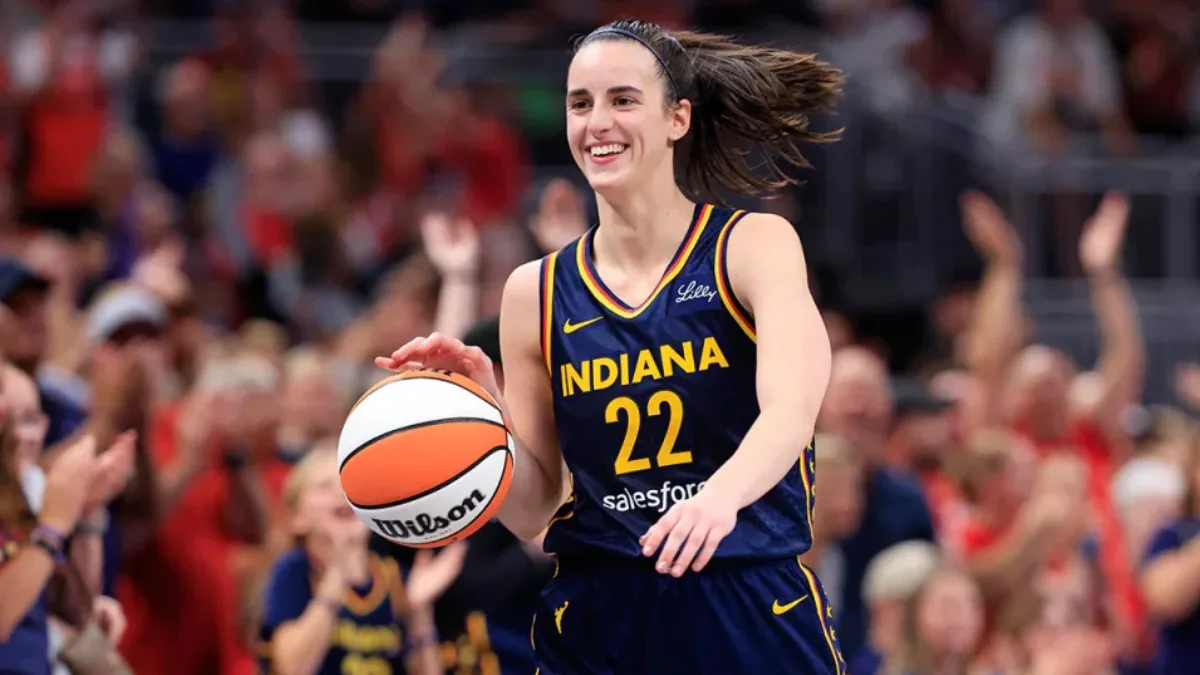
Caitlin Clark entered professional basketball, earning less than a high school teacher. Yet somehow, she was simultaneously one of the highest-paid female athletes on the planet. That’s the paradox at the center of Caitlin Clark’s financial story, and it tells you everything you need to know about the broken economics of women’s sports.
Right now, at just 24 years old, Clark’s net worth is estimated at around $10 million, with some outlets placing it as high as $20 million.
But the more important number isn’t what she’s worth today. It’s the trajectory: a $28 million Nike deal, a landmark Wilson partnership, $16 million in annual endorsements, and a new WNBA CBA that’s about to give her a 500% salary raise.
This is the complete financial breakdown of the woman who didn’t just play in the WNBA. She rebuilt it from the ground up.
What Is Caitlin Clark’s Estimated Net Worth in 2026?
As of 2025, Caitlin Clark net worth is estimated at $10 million, according to multiple financial sources. However, Parade places her net worth at $20 million as of December 2025, a figure that includes endorsement income, WNBA earnings, and overall financial growth.
The wide gap between those two estimates actually makes sense once you understand how Clark’s money works. The bulk of her wealth isn’t sitting in a WNBA paycheck. It’s spread across brand deals, appearances, and partnerships that most athletes don’t accumulate until much later in their careers.
Clark reportedly earned $16 million in endorsements in 2025, compared to her $78,066 in on-court earnings. That ratio alone explains why her net worth is difficult to pin down. She is essentially two separate financial entities: an underpaid athlete and a massively overperforming brand.
The $28 Million Nike Deal: The Most Lucrative in Women’s Basketball History
When Nike came calling, they didn’t just want her face on a poster. They wanted her name on a shoe.
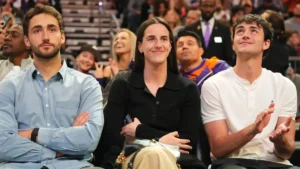
Clark’s Nike deal, announced on April 18, 2024, according to Reuters, is worth an estimated $28 million over eight years, paying her $3.5 million annually. This wasn’t just the biggest Nike deal for a women’s basketball player. It was a statement about where the sport was heading.
By October 2025, Nike released its first line of Caitlin Clark signature logo shirts, tees, hoodies, shorts, and pants, with a sneaker line expected in 2026. That sneaker launch could change everything. Clark’s planned Nike signature shoe could generate $10 million or more annually in royalties if successful, similar to what top NBA signature athletes earn.
The Nike relationship actually started long before the pro deal. The sneaker giant had previously inked an NIL deal with Clark in 2022, meaning Nike saw what was coming years before most of the sports world caught on.
WNBA Salary Then and Now: From $78K to $530K Under the New CBA
Here’s where the story gets both frustrating and exciting at the same time.
Clark’s base salary of $76,535 as a rookie in 2024 paled in comparison to NBA rookie deals. Victor Wembanyama, the 2023 NBA draft’s No. 1 pick, signed a $55.2 million contract with a rookie-year salary near $12 million.
That comparison hit differently when you consider Clark was already moving the needle on the entire league’s revenue, ticket sales, and national broadcast viewership from day one.
But the new WNBA Collective Bargaining Agreement just rewrote the script. The salary cap increased from $1.5 million to $7 million, revenue sharing climbed to nearly 20%, supermax deals start at $1.4 million, and the minimum salary will roughly double to around $600,000.
For Clark specifically, the numbers are dramatic. She was set to earn just $85,973 for her third season in 2026 under the old structure. Under the new CBA, she is set to make $530,000 in 2026, thanks to a provision called EPIC, or Exceptional Performance on Initial Contract, which fast-tracks high-performing players to max and supermax deals.
Clark’s salary is projected to rise to $1.3 million in 2027 as a previous All-WNBA First Team selection, with a potential $1.7 million supermax contract available in 2028.
Even then, her court earnings will remain a fraction of her off-court income. But the direction matters. The WNBA is finally building a financial structure that at least begins to reflect the value players like Clark bring to the sport.
Full Endorsement Portfolio: State Farm, Gatorade, Wilson, and More
The Nike deal gets the most attention, but Clark’s endorsement portfolio goes far deeper than one brand.
Her State Farm partnership is estimated at $1.5 million annually, featuring Clark in national TV campaigns and digital content. Her Gatorade deal is valued at approximately $1 million per year, featuring her in basketball-themed advertising. Her Bose partnership is estimated at $750,000 annually.
These aren’t just logos on a jersey. Each deal was strategically selected to build a personal brand that extends beyond basketball. State Farm places her in living rooms across America. Gatorade links her to the elite athlete conversation. Bose puts her in the cultural space where sports and lifestyle intersect.
Sportico ranked Clark sixth on the list of the highest-paid female athletes globally, largely because of her high-earning endorsement deals. She sits in the same financial universe as athletes who have been building their brands for decades, and she’s only in her third professional season.
NIL Earnings in College: How Clark Built Wealth Before Turning Pro
Most athletes arrive in professional sports with nothing but potential. Clark arrived with $3.1 million already in the bank.
Even before officially becoming a professional athlete, Clark signed several endorsement deals with major brands, including Nike, State Farm, Gatorade, Hy-Vee, Bose, and H&R Block, earning an estimated $3.1 million while still in college through NIL deals.
That foundation mattered. It meant she entered the WNBA draft with leverage, credibility, and a tested brand identity. Brands weren’t betting on a prospect. They were extending relationships they had already built.
Sports economist Andy Schwarz noted that NIL created a more accurate market for athlete value, allowing stars like Clark to capitalize on their popularity during college, when they often have their highest visibility, especially in women’s sports.
Clark used that window perfectly. By the time she was drafted No. 1 overall in 2024, the business infrastructure was already in place.
The Wilson Signature Collection: A Michael Jordan-Level Brand Milestone
There is one deal in Clark’s portfolio that stands apart from everything else, not because of the dollar figure, but because of the company it puts her in.
Clark signed a multiyear endorsement deal with sporting goods maker Wilson that includes a signature basketball collection. The only other athlete to have a signature collection with Wilson is Michael Jordan.
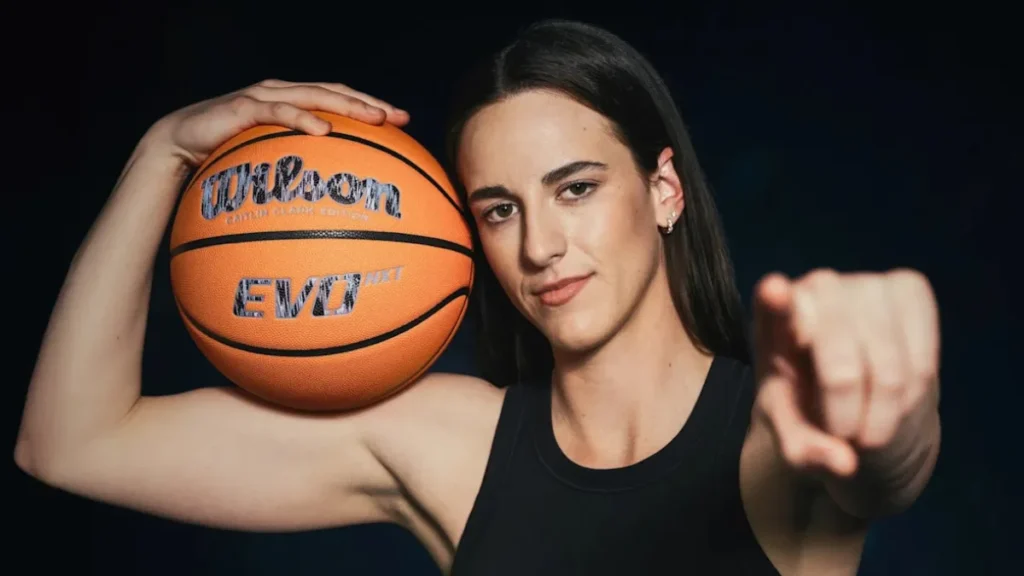
Let that land for a moment. A 24-year-old in her second professional season is sharing a brand milestone with the most commercially successful athlete in sports history. It’s not hyperbole. It’s a fact on a product tag.
Clark made history by becoming the first female athlete to launch her own collection with Wilson Sporting Goods, including a range of basketball gear and accessories.
The Wilson deal also signals something broader. Brands are no longer treating women’s basketball as a charitable investment or a diversity checkbox. They are treating it as a commercial opportunity, and Clark is the proof of concept.
Clark’s Economic Impact on the WNBA and Its Players
The most remarkable thing about Caitlin Clark’s financial story isn’t what she earned. It’s what her presence caused everyone around her to earn.
Sophie Cunningham gained 500,000 followers after one physical confrontation with Clark. Angel Reese’s endorsement portfolio expanded through a rivalry that Clark made nationally relevant. A’ja Wilson’s brand deals increased after Clark brought mainstream attention to the sport.
This is the Caitlin Clark economy in practice. One player’s gravitational pull is restructuring an entire industry.
Clark could realistically retire as the richest player in league history, given that her endorsements are only going to grow, and her WNBA salary will continue to rise alongside new TV deals and CBA agreements.
Sports business analyst David Carter noted that Clark has the potential to become the first WNBA player to build a billion-dollar career through smart brand partnerships, equity deals, and long-term business ventures beyond her playing days.
That’s not a guarantee. But for a player who was earning $78,000 on the court while generating millions in league revenue, it feels less like a prediction and more like a correction. The market always finds its level. For Caitlin Clark, the level is still rising.