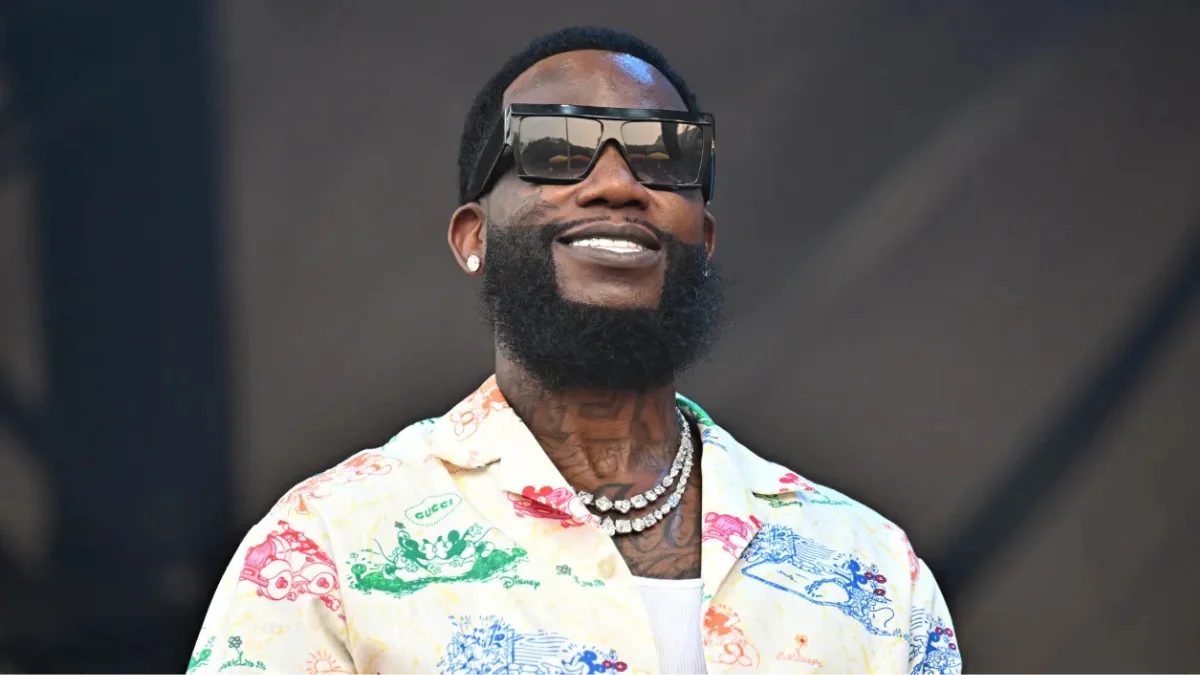
He grew up without a father, sold drugs in eighth grade, survived a murder charge, spent years in and out of prison, and somehow came out the other side as a multi-millionaire rap pioneer.
The story of Gucci Mane, born Radric Delantic Davis, is not a typical rags-to-riches tale. It is messier, darker, and far more fascinating than that.
From the streets of East Atlanta to a New York Times bestselling autobiography, a televised million-dollar wedding, and a fashion collaboration with the actual Gucci brand, this man has lived multiple lives inside one.
If you have ever wondered who Radric Davis really is, where he came from, what his family looks like today, and how much he is actually worth in 2025, here is everything you need to know.
The Boy Behind the Name: Radric Davis’ Early Life
Gucci Mane was born Radric Delantic Davis on February 12, 1980, in Bessemer, Alabama, to a former U.S. serviceman and power plant worker, Ralph Everett Dudley, and a social worker and teacher, Vicky Jean Davis.
So, to answer the question people frequently search: no, Gucci Mane himself did not serve in the military. But his family has deep roots in military service.
His paternal grandfather, James Dudley Sr., served for twelve years, including during World War II, and his maternal grandfather, Walter Lee Davis, served in the Pacific on the USS South Dakota. His father also completed a two-year military stint in Korea.
The military legacy stopped there, because by the time Radric arrived, things at home were already falling apart. When Davis was born, his father was on the run from police for dealing crack cocaine and heroin and had fled to Detroit. He was not present to sign the birth certificate, which is why Davis took his mother’s last name.
In Bessemer, young Davis actually excelled academically and was known for his kindness and reserved nature. But when his mother relocated the family to Atlanta in pursuit of a better life, everything shifted.
Adjusting to the new environment proved difficult as Davis struggled to form friendships and endured ridicule. His talent for composing rap with poetic elements became his outlet during those trying times.
He eventually returned to Alabama to stay with his grandfather for a period, but his heart stayed in Atlanta. He demonstrated a flair for writing verses as a child and began rapping at the age of 14. By his teenage years, he was already navigating the streets with more than just rhymes. It was during those formative years that he turned to selling drugs as a means of survival.
From Zone 6 to the Trap House: The Rise of Gucci Mane
In 2001, Davis released an album called La Flare under the record label Str8 Drop Records. Approximately 1,000 CDs of the album were distributed on the streets. It was a humble beginning, but it was his beginning.
He then went to New York looking for a distribution deal, but the trip was uneventful. He returned to Atlanta and continued networking until he was introduced to Big Cat, the head of Big Cat Records. They immediately hit it off and began working on a new record together.
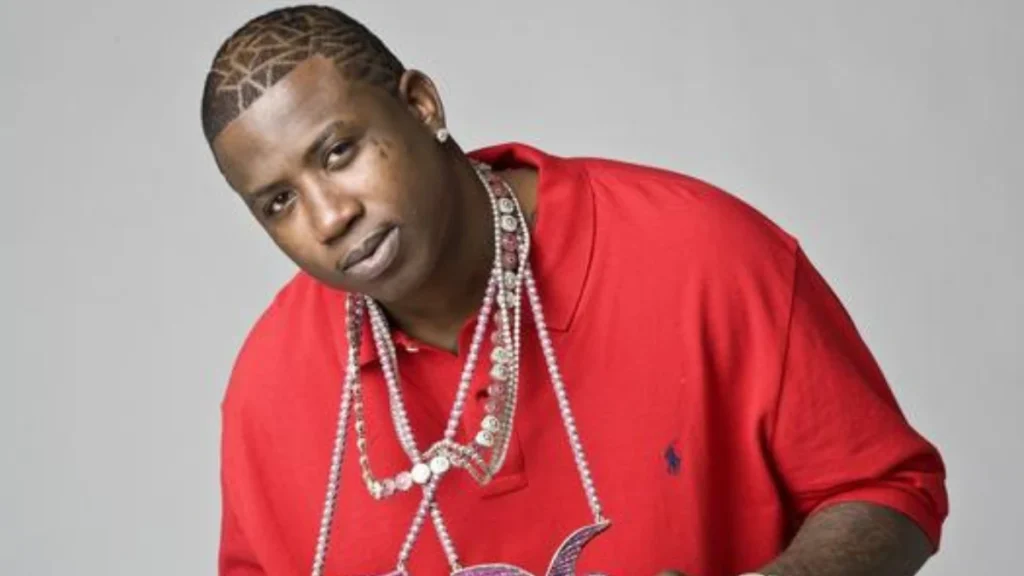
That record became his 2005 debut, Trap House, which featured the now-iconic single “Icy” with Young Jeezy. It entered the Billboard 200 and announced to the world that Atlanta had a new voice. But the success was soon overshadowed by chaos.
In May 2005, four men attacked Gucci Mane at a house in Decatur, Georgia, in what he claimed was an attempted robbery. He shot one of the assailants, who was later found buried behind a local middle school. The murder charge was eventually dropped for insufficient evidence, but Gucci still served six months for a separate assault on a nightclub promoter.
He followed Trap House with Hard to Kill and Trap-A-Thon in 2006, then signed with Asylum/Atlantic Records and released Back to the Trap House in 2007. The years between 2007 and 2010 were arguably the most prolific stretch of his career. From 2005 to 2009, Gucci was putting out six to ten mixtapes a year, raw and immediate, while simultaneously dropping studio albums.
In 2009, The State vs. Radric Davis was released under Warner Bros. Records and peaked in the top ten of the Billboard 200. Its sequel, The Appeal: Georgia’s Most Wanted, released in 2010, peaked at number four. That same year, he landed on Forbes’ Hip-Hop Top 20 Earners list with $5 million for the year alone. At his peak, Gucci Mane in 2010 was not just a rapper; he was a movement.
Prison, Transformation, and the Comeback Nobody Saw Coming
The years that followed were turbulent. Legal trouble piled up faster than mixtapes. In September 2013, Davis was arrested for carrying a concealed weapon, marijuana possession, and disorderly conduct. Federal prosecutors later charged him with unlawful possession of a firearm. He pleaded guilty and was sent to the U.S. Penitentiary in Terre Haute, Indiana, where he remained until being released in May 2016.
What happened next shocked the internet. Gucci Mane walked out of prison looking like a completely different person. He emerged 90 pounds lighter, clean, and carrying a handwritten five-year plan. He had kicked a years-long addiction to lean, started working out twice a day, and spent his prison time writing what would become The Autobiography of Gucci Mane. So many fans were stunned by his physical transformation that an absurd “Gucci clone” conspiracy went viral. He found it funny.
Within months of his release, he dropped Everybody Looking, which debuted at number two on the Billboard 200. Hit singles like “First Day Out Tha Feds” and “Back on Road” signaled a triumphant return.
His autobiography, The Autobiography of Gucci Mane, became a New York Times bestseller in 2017. Co-written with journalist Neil Martinez-Belkin, the book was brutally honest about his addictions, legal troubles, and personal failures. It was not just a celebrity memoir. It was a survival story.
Gucci Mane’s Wife, Kids, and Family Life Today
In the middle of his comeback, Gucci Mane also became a husband. Davis married Keyshia Ka’oir in October 2017. The planning and celebration of their wedding was documented in BET’s 10-episode series, The Mane Event. The ceremony was reportedly valued at $1.7 million and became one of the most-watched moments in BET history that year.

Ka’oir never left his side during his time in prison. “She’d taken every one of my phone calls since my arrest. Her phone bill was ridiculous from all my collect calls,” Gucci wrote in his autobiography.
In 2007, Gucci had his first son, Keitheon Davis, with ex Sheena Evans. His first child with Ka’oir, Ice Davis, was born in December 2020, and in early 2023, he welcomed another child with his wife, Iceland Ka’oir Davis. He is now a father of three, and by all accounts, family life has been a grounding force in his post-prison chapter.
Gucci Mane’s Net Worth in 2025 and What He Is Doing Now
So what is Gucci Mane worth today? Most credible estimates place his net worth at around $14 million in 2025, though Celebrity Net Worth puts it closer to $25 million when combined with his wife Keyshia Ka’oir’s assets.
His net worth in 2025 is built on earnings from his rap career, acting roles, and business ventures, including brand collaborations. Beyond music, he founded 1017 Records in 2007, which launched the careers of Waka Flocka Flame, Young Thug, and Migos, and he launched his clothing line, Delantic, in 2018. He has also secured brand partnerships with Supreme, Reebok, and, in 2019, the actual Gucci fashion house, which invited him to collaborate on their Cruise 2020 campaign.
Most recently, Mane announced he is parting ways with Atlantic Records, signaling a new era of independence and ownership over his work.
At 45 years old, Radric Davis has outlasted every prediction made about him. He survived the streets, survived prison, survived public ridicule, and survived his own worst instincts. The Gucci Mane of today is not the same man who made Trap House in 2005, and that is precisely the point. The most remarkable chapter of his story might still be the one he is writing right now.