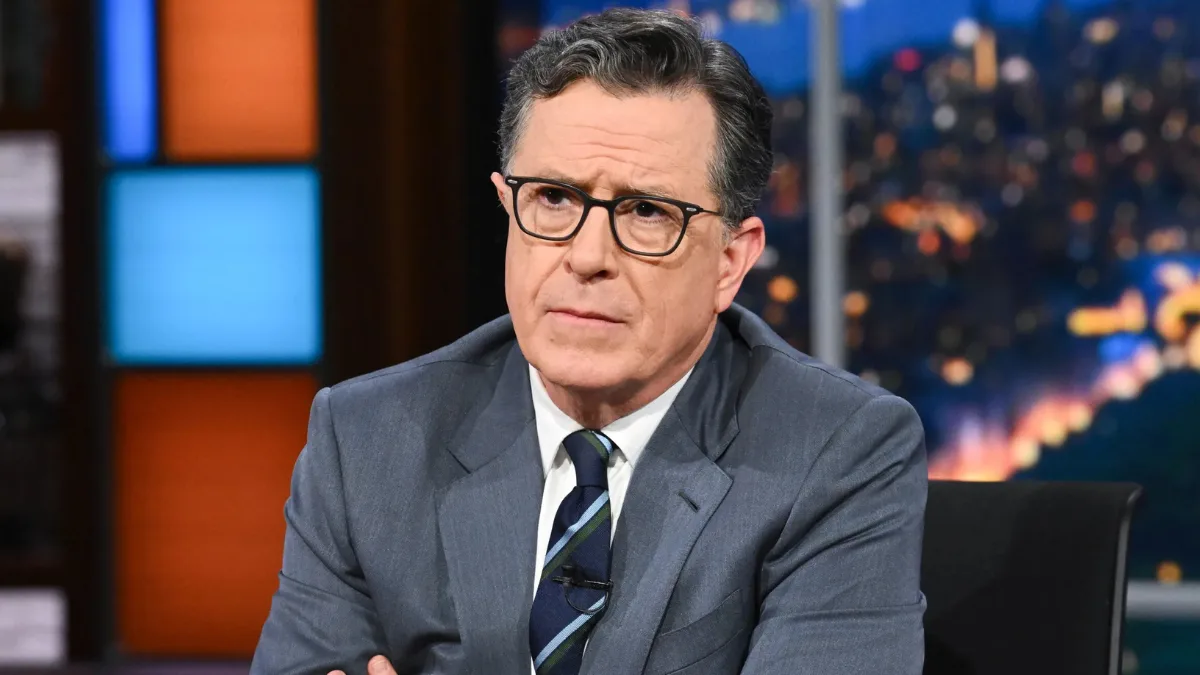
- When The Late Show ends on May 21, CBS will retire the entire franchise permanently, leaving the network without a late-night presence for the first time since David Letterman arrived in 1993.
- NBC’s Jimmy Fallon and Seth Meyers are contracted through 2028, while ABC’s Jimmy Kimmel is entering the final year of his current deal, making his future the most closely watched question in late-night right now.
- Industry analysts are openly asking whether the broadcast late-night format itself is dying, as ad revenue continues to fall and younger audiences consume highlights on social media rather than watching full shows live.
Thirty-three years. Two legendary hosts. One institution that shaped how America processed the news every night before bed. When Stephen Colbert takes his final bow on May 21, he won’t just be ending a show. He’ll be closing a chapter of American television that nobody knows how to replace. Here is what the late-night landscape actually looks like on May 22 and beyond.
CBS Simply Turns the Lights Off
This is the part that still feels surreal. There is no successor. No new host waiting in the wings. No rebranded version of the show with a fresh face.
CBS called Colbert irreplaceable and announced it would retire The Late Show franchise entirely, leaving the network without a late-night presence for the first time since 1993. That is not a small thing. For three decades, the 11:35 p.m. slot on CBS was one of the most valuable pieces of real estate in American television. After May 21, network insiders expect affiliates to air local news or other programming in the formerly coveted slot.
Local news. Where a cultural institution once stood.
CBS called it “purely a financial decision against a challenging backdrop in late night,” with the network emphasising that the cancellation was not related in any way to the show’s performance, content, or other matters happening at Paramount. Not everyone bought that explanation. The announcement came just three days after Colbert publicly criticised Paramount’s $16 million settlement with President Trump over a 60 Minutes interview, and two U.S. senators publicly questioned the network’s motives.
Who Is Left Standing and for How Long
Late night on broadcast television is now a two-network game, and one of those networks is already showing cracks.
NBC’s Jimmy Fallon and Seth Meyers signed deals last year to continue hosting The Tonight Show and Late Night through 2028. ABC’s Jimmy Kimmel Live will begin the final year of its current three-year deal in the fall, making Kimmel’s renewal the single most consequential late-night negotiation of the next 12 months.
NBC has already acknowledged the economic pressure by eliminating the band on Seth Meyers’ show and cutting one night of Jimmy Fallon’s Tonight Show. These are not cosmetic changes. They are the kinds of cost-cutting moves that signal a network quietly preparing for a world where the format may not be financially sustainable at its current scale.
Trump, for his part, posted on Truth Social that he “absolutely loved” the cancellation, took shots at Kimmel and Fallon, and declared Fox News Channel’s Greg Gutfeld better than all of them. Whether Gutfeld’s cable model represents the future of the format or just a different audience entirely is something the industry is actively debating.
The Real Problem Nobody Wants to Say Out Loud
It is not just Colbert’s show. It is the entire format.
Viewership across all late-night talk shows has shifted toward streaming and digital clips, and the decision signals network television’s shrinking advertising revenue in the genre. Industry analysts are openly debating whether the late-night format itself is in decline.
The economics are brutal and getting worse. Young viewers watch the monologue clip on YouTube the next morning. They share the interview moment on Instagram. They catch the cold open on TikTok. All of that content is produced by the network, generates enormous engagement, and is extraordinarily difficult to monetise in the way a live broadcast advertisement can be. The show does the work. The platform gets the revenue.
Andy Cohen, who built his career at CBS, put it plainly: “It is a very sad day for CBS that they are getting out of the late-night race. They are turning off the lights after the news.”
What Colbert Leaves Behind
It would be easy to frame the end of The Late Show as a defeat. It isn’t.
The Late Show won the 2026 Producers Guild Award for Outstanding Producer of Live Entertainment, Variety, Sketch, Standup and Talk Television, one of a string of honors the industry has quietly been bestowing on the show as it heads toward the exit. The show dominated its competitors and has been a lightning rod and a cultural fixture for the past decade, going out with bangs rather than whimpers.
Colbert told his audience: “It is a fantastic job. I wish somebody else was getting it.” That single line said everything. He isn’t bitter. He is genuinely proud of what was built in that room, with those 200 people, every weeknight for eleven years.
Now he goes to write hobbits back into a movie. And late night figures out what it is without him.